
SunXT JV Drives Industrialization of Next-Gen Photovoltaics SunXT
合资公司推动下一代光伏产业化
Introduction
Over the past decade, the global photovoltaic (PV) industry has entered a new phase of innovation driven by the physical limits of conventional crystalline silicon technologies and the growing demand for higher efficiency, lower system costs, and reduced environmental impact. Among the most promising breakthroughs is perovskite–silicon tandem PV technology, which combines a high-bandgap perovskite top cell with a silicon bottom cell to capture a broader portion of the solar spectrum.
This approach offers a credible pathway to surpass the efficiency ceiling of single-junction silicon while remaining compatible with existing manufacturing infrastructure, making it a focal point for next-generation solar industrialization strategies worldwide.
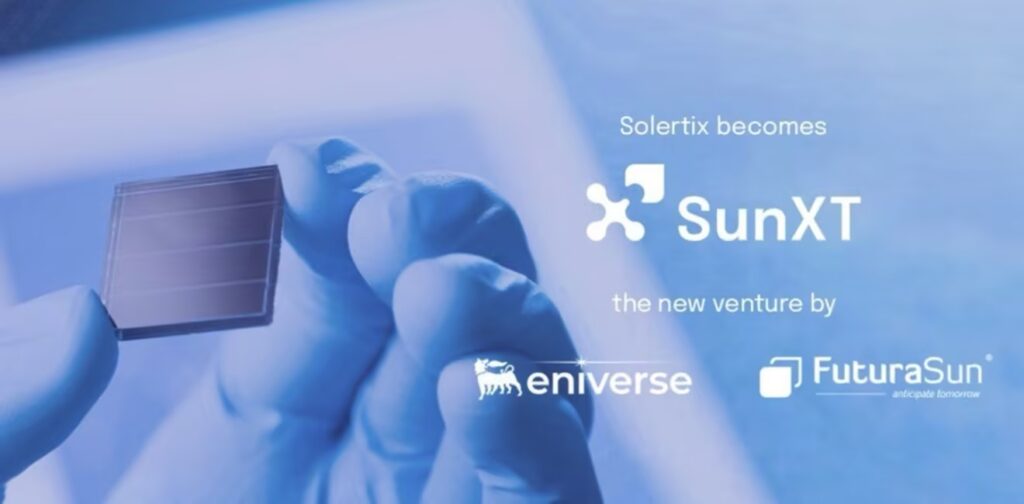
Against this backdrop, on 19 December 2025, FuturaSun announced a strategic partnership with Eniverse, the corporate venture capital and incubation platform of Eni Group, to establish a new joint venture, SunXT. The initiative—developed by two companies that also collaborate within the CNEUCN ecosystem—aims to translate advanced perovskite–silicon tandem research into pilot manufacturing and, ultimately, scalable market deployment.
SunXT is rooted in Solertix, FuturaSun’s Italy-based perovskite R&D subsidiary. Solertix was founded by internationally recognized researchers and is among Europe’s early teams working on perovskite solar cells and modules. Since 2023 it has served as FuturaSun’s tandem-PV research platform in Italy. By spinning this capability into SunXT, the partners intend to connect laboratory know-how with an execution vehicle focused on engineering, manufacturability, and bankable product pathways. Solertix’s leadership has emphasized that this industrial step builds on research accumulation dating back to early perovskite module work in Rome-based laboratories beginning in 2013, and that the venture is meant to accelerate a mission of improving PV performance, lowering energy costs, and reducing environmental footprint through scalable innovation.
SunXT represents a concrete case study of how European actors are structuring pathways for next-generation solar technologies, and how such developments create new reference points for industrial collaboration and technology exchange within the broader China–Europe energy transition landscape.
引言
在过去十年中,全球光伏(PV)产业在传统晶体硅技术逐步逼近物理极限、以及对更高效率、更低系统成本和更小环境影响需求不断上升的共同推动下,进入了一个新的创新阶段。在众多潜在突破路径中,钙钛矿–晶硅叠层光伏技术被认为是最具前景的方向之一。该技术通过将高带隙钙钛矿顶电池与晶硅底电池相结合,可捕获更宽范围的太阳光谱。
这种技术路线在保持与现有制造基础设施兼容的前提下,为突破单结晶硅电池的效率上限提供了一条可信路径,因此已成为全球下一代太阳能产业化战略的重点关注方向。
在这一背景下,2025 年 12 月 19 日,FuturaSun 宣布与 Eni 集团旗下的企业风险投资与孵化平台 Eniverse 达成战略合作,成立新的合资公司 SunXT。该项目由两家同时在 CNEUCN 生态体系内开展合作的企业共同推进,目标是将先进的钙钛矿–晶硅叠层研究成果转化为示范制造能力,并最终实现可规模化的市场部署。
SunXT 源自 Solertix——FuturaSun 设在意大利的钙钛矿研发子公司。Solertix 由多位国际知名研究人员创立,是欧洲较早从事钙钛矿太阳能电池及组件研究的团队之一。自 2023 年起,Solertix 一直作为 FuturaSun 在意大利的叠层光伏研发平台运行。通过将这一研发能力剥离并注入 SunXT,合作双方旨在将实验室层面的知识积累,与一个专注于工程化、可制造性和可融资产品路径的执行载体相连接。
Solertix 管理层指出,这一产业化举措建立在自 2013 年起于罗马多家实验室开展的早期钙钛矿组件研究基础之上,其目标在于通过可规模化的创新,加速实现提升光伏性能、降低能源成本以及减少环境足迹的使命。
SunXT 构成了一个具体案例,展示了欧洲相关主体如何构建下一代太阳能技术的产业化路径,同时也说明了此类进展如何在更广泛的中欧能源转型背景下,为产业协作与技术交流创造新的参考点。
Partnership Structure and Strategic Rationale
SunXT brings together complementary assets across research, materials innovation, and industrial execution. FuturaSun leads the joint venture with a 56.1% equity stake, while Eniverse contributes capital and access to Eni Group’s innovation ecosystem, including materials know-how relevant to perovskite development.
Key elements highlighted in the announcement include:
Funding: the venture is supported by multi-million-euro financing intended to enable the pilot-line stage and the first industrial steps.
Integration logic: Solertix’s perovskite expertise is combined with Eniverse’s industrial and innovation interface within Eni Group.
Objective: create a coherent technology chain—from perovskite materials and device design to module engineering and scaled production.
Governance and control: FuturaSun holds 56.1% and Eniverse 43,9% of SunXT, positioning it to steer technology choices and industrial timing.
In practical terms, this structure addresses a common bottleneck for next-generation PV: the “translation gap” between scientific progress and repeatable manufacturing. By placing R&D and industrialization under a single venture framework, SunXT aims to shorten feedback loops—so that reliability testing, process engineering, and materials refinement can progress in parallel rather than sequentially. It also clarifies accountability: a dedicated joint venture has clearer priorities and milestones than a research-only program, while still being able to draw on the scientific and industrial resources of the parent organizations.
合作架构与战略逻辑
SunXT 汇聚了科研、材料创新与产业执行等多方面互补资源。FuturaSun 以 56.1% 的股权比例主导合资公司,而 Eniverse 则提供资金支持,并为项目引入 Eni 集团创新生态系统中的相关资源,包括与钙钛矿开发相关的材料技术积累。
公告中强调的关键要素包括:
- 资金支持:该合资企业获得千万欧元级融资,用于支撑示范产线阶段及初期产业化推进;
- 整合逻辑:将 Solertix 的钙钛矿专业能力,与 Eniverse 在 Eni 集团内部所承担的产业与创新接口相结合;
- 目标:构建一条连贯的技术链条——从钙钛矿材料与器件设计,到组件工程与规模化生产;
- 治理与控制:FuturaSun 持有 56.1% 股权,Eniverse 持有 43.9%,确保前者在技术路线选择与产业推进节奏上的主导权。
从实际操作层面看,这一结构针对的是下一代光伏技术普遍面临的一个核心瓶颈——科学进展与可重复制造之间的“转化缺口”。通过在同一合资框架下同时推进研发与产业化,SunXT 旨在缩短反馈周期,使可靠性测试、工艺工程与材料优化能够并行推进,而非按顺序展开。这种结构也明确了责任边界:一个专门设立的合资公司,相较于仅限于研究的项目,拥有更清晰的优先级与阶段性里程碑,同时仍能够调动母公司在科研与工业层面的资源支持。
Technology Focus: Bifacial Four-Terminal (4T) Tandem Modules
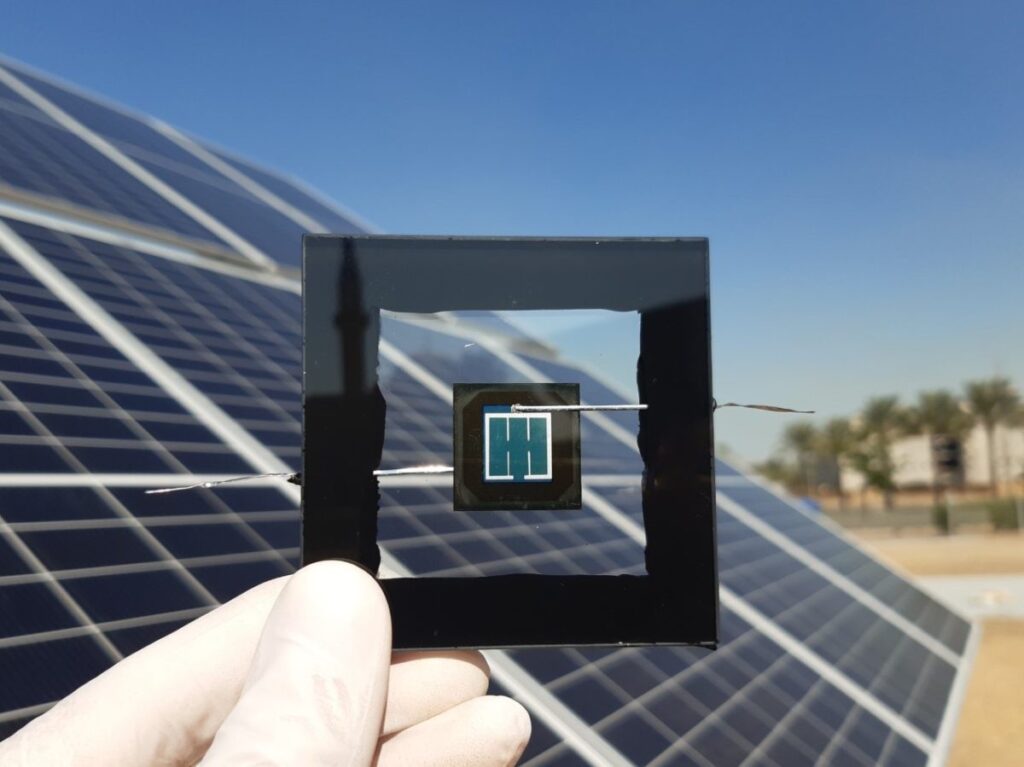
SunXT’s technical roadmap centers on bifacial four-terminal (4T) perovskite–silicon tandem modules. In a 4T configuration, the perovskite top cell and the silicon bottom cell operate independently, which supports separate optimization and can help manage performance and stability trade-offs during scale-up.
The approach is characterized by:
Independent operation: each sub-cell can be tuned without forcing electrical matching constraints typical of monolithic (two-terminal) tandems.
Spectral utilization: perovskite and silicon absorb different parts of the solar spectrum, enabling higher potential conversion efficiency than silicon alone.
Bifacial design intent: the module concept is designed to capture light from both front and rear sides, improving energy yield in suitable installation conditions.
Manufacturing interface: the pathway is positioned to remain compatible with existing silicon PV manufacturing infrastructure, supporting industrial feasibility.
This design choice also matters for early commercialization. Independent sub-cell operation can provide flexibility when perovskite material systems are iterating quickly. It allows the venture to evolve the perovskite stack while maintaining the silicon baseline, supporting staged improvements rather than requiring an all-at-once redesign.
In SunXT’s framing, the 4T tandem concept is intended to “lift” conventional silicon module performance by pairing silicon with a high-bandgap top layer that captures additional photons. The practical goal is not only higher nameplate efficiency, but also robust energy yield across different operating environments—so that performance gains remain meaningful in real installations rather than only under standard test conditions.
技术重点:双面四端(4T)叠层组件
SunXT 的技术路线以双面四端(4T)钙钛矿–晶硅叠层组件为核心。在 4T 架构中,钙钛矿顶电池与晶硅底电池彼此独立运行,这一设计支持分别优化各子电池,并有助于在规模化过程中管理效率与稳定性之间的权衡。
该技术路径具有以下特征:
- 独立运行:每个子电池均可单独调校,避免了单体(两端)叠层结构中常见的电学匹配约束;
- 光谱利用:钙钛矿与晶硅分别吸收不同波段的太阳光谱,使潜在转换效率高于单一硅技术;
- 双面设计意图:组件概念支持正反两面受光,在适宜的安装条件下提升发电量;
- 制造接口:该路径保持与现有晶硅光伏制造基础设施的兼容性,有助于提升产业可行性。
这一设计选择对于早期商业化同样具有重要意义。在钙钛矿材料体系仍处于快速迭代阶段时,子电池的独立运行提供了更高灵活性,使项目能够在保持硅基底层稳定的同时,不断演进钙钛矿结构,从而支持阶段性改进,而无需一次性完成全面重构。
在 SunXT 的技术定位中,4T 叠层概念的目标在于通过将高带隙钙钛矿顶层与硅组件相结合,“抬升”传统硅组件的整体性能。其实际追求的不仅是标称效率的提升,更是在不同运行环境下实现稳健的能量产出,使性能提升在真实应用场景中同样具备意义,而非仅存在于标准测试条件下。
Industrial Roadmap: Pilot Lines, Validation, and Scale-Up
SunXT’s stated plan begins with a demonstration production line and then progresses toward industrial scale. This phased approach mirrors how new PV technologies typically become bankable: performance claims must be supported by repeatability, durability evidence, and stable manufacturing metrics.
SunXT’s roadmap will go through four practical milestones, each designed to reduce technical and commercial risk:
Pilot manufacturing: establish a demonstration line to validate process windows, yield stability, and module reproducibility.
Reliability and qualification: generate robust datasets on degradation behavior, encapsulation effectiveness, and performance under varying operating conditions.
Product definition: refine module formats and specifications for distinct markets (residential, commercial & industrial, and utility scale).
Gradual scale-up: move from pilot output to larger volumes once technical and supply-chain readiness are proven.
For tandem PV, the pilot stage is not only about efficiency—it is about consistency and long-term behavior. Scaling requires controls over materials deposition, interface quality, encapsulation, and module assembly. It also requires operational discipline around measurement and traceability so that deviations can be diagnosed quickly.
SunXT’s venture structure is designed to keep these engineering tasks tightly connected to the underlying perovskite research program, enabling:
Rapid iteration between reliability findings and materials improvements
Process standardization for repeatable output, not one-off prototypes
Data generation that supports customer confidence and future product qualification
产业路线图:示范产线、验证与规模化
SunXT 公布的发展规划以示范生产线为起点,随后逐步迈向产业化规模。这一分阶段路径符合新型光伏技术实现可融资部署的常见逻辑:性能主张必须通过可重复性、耐久性和制造稳定性加以验证。
其产业路线图围绕四个实际里程碑展开,旨在逐步降低技术与商业风险:
- 示范制造:建立示范产线,验证工艺窗口、良率稳定性及组件可重复性;
- 可靠性与认证:形成关于性能衰减、封装有效性以及不同运行条件下表现的系统性数据;
- 产品定义:针对住宅、工商业及公用事业市场,明确不同组件规格;
- 渐进放量:在技术与供应链准备充分后,从示范产量逐步扩大至更大规模。
对于叠层光伏而言,示范阶段不仅关乎效率,更关乎一致性与长期行为。规模化生产要求对材料沉积、界面质量、封装工艺与组件组装进行精细控制,同时还需要在测量与数据可追溯方面建立严格的操作规范,以便快速诊断偏差。
SunXT 的合资架构旨在使这些工程任务与底层钙钛矿研究保持紧密联动,从而实现:
- 可靠性结果与材料改进之间的快速迭代;
- 面向可重复产出的工艺标准化,而非一次性原型;
- 为客户信心与未来产品认证提供支撑的数据积累。
Market Relevance and Deployment Scenarios
The venture targets three primary market segments—residential, commercial & industrial, and utility scale—where higher module efficiency and improved energy yield can translate into tangible system-level value. However, each segment has different constraints, and SunXT’s phased strategy suggests an intent to align product design with application needs.
Key market considerations include:
Residential rooftops: higher efficiency can increase energy yield per square meter, supporting electrification of homes where roof area is limited.
Commercial & industrial sites: predictable performance and durability are crucial for investment decisions; energy yield and reliability drive payback profiles.
Utility-scale projects: efficiency gains can reduce land requirements and balance-of-system costs, but bankability and standardized procurement are demanding.
At the same time, industrialization success depends on addressing common PV buyer concerns: long-term reliability, consistent supply, and transparent performance data. SunXT’s pilot-first approach suggests an intent to build the evidence base that downstream investors and developers typically require—especially for emerging tandem architectures.
If successful, higher-efficiency tandem modules can support:
More output from constrained roof or site area
Lower levelized cost of energy through higher lifetime yield
Reduced system material use per unit of electricity produced, contributing to a smaller overall footprint
市场相关性与应用场景
SunXT 主要面向住宅、工商业以及公用事业三大市场领域。在这些领域中,更高的组件效率与更优的能量产出有望转化为系统层面的实际价值。然而,不同市场的约束条件各不相同,SunXT 的分阶段策略显示出其希望将产品设计与具体应用需求相匹配。
关键市场考量包括:
- 住宅屋顶:在屋顶面积受限的情况下,更高效率有助于提升单位面积发电量,支持住宅电气化;
- 工商业场景:可预测的性能与耐久性对投资决策至关重要,能量产出与可靠性直接影响回报结构;
- 集中式项目:效率提升可降低土地需求与系统成本,但对可融资性与标准化采购要求更高。
与此同时,产业化成功还取决于能否回应光伏买方普遍关注的问题:长期可靠性、稳定供应以及透明的性能数据。SunXT 以示范产线为先的路径,显示出其希望构建下游投资者与开发商通常所要求的证据基础,尤其是在叠层这一新兴技术架构领域。
若叠层技术成功实现规模化,其潜在价值包括:
- 在受限屋顶或场地中实现更高电力输出;
- 通过更高生命周期发电量降低度电成本;
- 减少单位发电量所需的系统材料用量,从而缩小整体环境足迹。
Conclusion
SunXT’s formation marks a tangible step toward industrializing perovskite–silicon tandem photovoltaics, translating long-term European research capabilities into an execution pathway centered on pilot manufacturing and phased scale-up. By combining Solertix’s perovskite expertise with FuturaSun’s manufacturing orientation and Eniverse’s access to Eni Group’s innovation resources, the venture is designed to connect advanced materials development with repeatable production.
With demand rising for higher-efficiency PV modules across residential, commercial, and utility markets, tandem technologies are increasingly relevant for meeting efficiency targets, space constraints, and decarbonization objectives—provided reliability and manufacturability are demonstrated at scale. SunXT’s focus on bifacial four-terminal architecture and a demonstration-line-first roadmap reflects a pragmatic industrial approach.
In an EU–China context, next-generation PV progress can create opportunities for technical exchange and pilot dialogue across the solar value chain. In line with CNEUCN’s mission to promote technological innovation across climate change mitigation and decarbonization-related industries, this joint venture—bringing together two CNEUCN business partners with a strong focus on innovation development—illustrates the type of outcome CNEUCN seeks to enable by bridging companies, research institutes, and academia to accelerate tangible industrial results.
结论
SunXT 的成立标志着钙钛矿–晶硅叠层光伏迈向产业化的重要一步,将欧洲长期积累的科研能力转化为以示范制造和分阶段放量为核心的执行路径。通过整合 Solertix 的钙钛矿专业能力、FuturaSun 的制造导向,以及 Eniverse 所连接的 Eni 集团创新资源,该合资企业旨在将先进材料开发与可重复生产紧密衔接。
在住宅、工商业及公用事业市场对高效率光伏组件需求持续上升的背景下,叠层技术在满足效率目标、空间约束及脱碳需求方面的重要性不断凸显,前提是其可靠性与可制造性能够在规模化条件下得到验证。SunXT 对双面四端架构的选择,以及以示范产线为先的发展路线,体现了一种务实的产业化思路。
在中欧语境下,下一代光伏技术的进展为太阳能全价值链上的技术交流与示范对话创造了新的机会。作为由两家 CNEUCN 商业合作伙伴共同推动、并高度聚焦创新发展的合资项目,SunXT 清晰展现了 CNEUCN 所致力于促成的成果类型——通过连接企业、科研机构与学术界,加速前沿技术向可落地产业成果的转化。
 ZH
ZH