

Electrifying Special-Purpose Mobility: Europe accelerates EV adoption and municipalities seek clean, efficient utility fleets.
电动化专用出行:欧洲加速推进电动车应用,地方政府寻求清洁、高效的公用车队
Introduction
Across Europe, the electrification of special-purpose vehicles — municipal fleets, airport service equipment, industrial logistics platforms, and other utility vehicles — is becoming one of the most important but under-reported mobility transitions. While passenger EVs dominate public debate, utility and municipal electrification is where the fastest operational and climate gains will occur.
These trends are creating strong demand for reliable, cost-efficient, and customizable electric work vehicles.
From waste-collection trucks to airport service vehicles, from street sweepers to last-mile delivery platforms, these fleets form the backbone of Europe’s urban and industrial ecosystems. Their decarbonization is rapidly moving from “optional” to “urgent,” driven by:
- EU climate targets and Fit for 55 requirements,
- Local air-quality mandates,
- Rising operational costs for diesel vehicles,
- Expansion of low-emission zones in most major European cities.
At the same time, many European manufacturers are investing in advanced powertrains, digital fleet systems, specialized upper-bodies, and sector-specific engineering. Their deep knowledge of European standards, operational conditions, and customer expectations remains indispensable.
In this evolving landscape, China–EU cooperation is emerging as a practical and mutually beneficial pathway, especially in the area of electric chassis, modular platforms, and scalable components. Chinese manufacturers bring strengths in scalable EV architectures, while European manufacturers offer excellence in upper-body equipment, safety engineering, digital integration, and regulatory alignment.
The two sides can be complementary — not competitive — when cooperation is well structured.
This context provides an opportunity to explore how companies from the two regions can contribute technically to European needs, particularly in areas where cooperation expands options, strengthens supply chains, and accelerates Europe’s decarbonization without undermining local industry.
引言
在整个欧洲,专用车辆的电动化——包括市政车队、机场服务设备、工业物流平台以及其他公用车辆——正成为最重要却又最容易被忽视的交通转型之一。尽管乘用电动车在公共讨论中占据主导地位,但在实际运营与气候减排层面,公用与市政车辆的电动化才是能够带来最快、最直接成效的领域。
这一趋势正在催生对可靠、具成本效益且可定制的电动工作车辆的强烈需求。 从垃圾收运车辆到机场地勤设备,从道路清扫车到末端配送平台,这些车队构成了欧洲城市与工业体系的基础支柱。它们的脱碳进程,正迅速从“可选项”转变为“紧迫任务”,其驱动因素包括:
- 欧盟气候目标及 “Fit for 55” 一揽子政策要求;
- 地方空气质量管控法规;
- 柴油车辆运营成本持续上升;
- 欧洲大多数主要城市低排放区(LEZ)和超低排放区(ULEZ)的不断扩展。
与此同时,众多欧洲制造商正持续投入先进动力系统、数字化车队管理系统、专用上装设备以及行业定制化工程能力。其对欧洲标准、运行条件及客户预期的深刻理解,依然不可替代。
在这一不断演进的格局中,中欧合作正在成为一条务实且互利的路径,尤其体现在电动底盘、模块化平台及可规模化部件领域。中国制造商在可扩展电动车架构方面具备优势,而欧洲制造商则在上装设备、安全工程、数字化集成及法规适配方面表现卓越。
在合理架构下,双方可以形成互补,而非竞争关系。
正是在这样的背景下,有必要探讨来自两个地区的企业如何在技术层面回应欧洲需求,尤其是在通过合作拓展选择空间、强化供应链,并在不削弱本土产业的前提下加速欧洲脱碳进程的领域。
Europe’s Transition: Market Trends Driving Demand
1. Municipal Fleets: From Diesel to Zero-Emission Operations
European cities are under strong pressure to decarbonize essential public services. Waste collection, sanitation, water and utility maintenance, and street-cleaning vehicles operate daily in dense urban areas, where noise and air pollution carry high political and social costs.
Electrifying these fleets offers immediate benefits:
- Lower operating costs (electric drivetrains reduce fuel and maintenance expenditure),
- Reduced urban noise,
- Full compliance with LEZ/ULEZ regulations,
- Alignment with ESG and climate-neutrality roadmaps adopted in most major cities.
European OEMs have already invested heavily in this shift, but demand for specialized EV configurations is rising faster than development cycles, especially when multiple vehicle types need to be electrified simultaneously. This opens space for co-development, not substitution.
欧洲转型:推动需求增长的市场趋势
1. 市政车队:从柴油向零排放运营转型
欧洲城市正面临着对基础公共服务进行脱碳的巨大压力。垃圾收运、环卫作业、水务与公共设施维护、道路清扫等车辆,日常运行于人口密集的城市区域,其噪音与空气污染具有高度的政治与社会敏感性。
对这些车队实施电动化,可带来立竿见影的益处:
- 更低的运营成本(电驱系统显著降低燃料与维护支出);
- 显著降低城市噪音;
- 全面符合 LEZ / ULEZ 相关法规;
- 与多数城市已采纳的 ESG 目标及气候中和路线图保持一致。
欧洲整车制造商已在这一转型中进行了大量投入,但在多车型同时电动化的背景下,对专用电动车配置的需求增长速度,已快于传统研发周期。这为联合开发而非替代式竞争创造了空间。
2. Industrial, Port, and Airport Operations: The Shift to Efficient, Data-Driven EVs
Move to Zero Emissions
Beyond municipalities, electrification is accelerating in airports, logistics hubs, maritime ports, and industrial zones. Ground-support equipment, cargo carriers, terminal tractors, and maintenance vehicles are increasingly required to transition toward clean operations.
Key drivers include:
- Airport decarbonization programs under ACI Europe,
- EU Green Port initiatives,
- Rising energy-efficiency mandates for industrial facilities,
- Digital fleet-management requirements that favour EVs with integrated telematics.
European manufacturers excel in specialized equipment and high standards, while Chinese suppliers can offer flexible base chassis and scalable component architectures.
Joint integration creates solutions neither side could achieve alone, especially for complex or fast-evolving fleet needs.
2. 工业、港口与机场运营:迈向高效、数据驱动的电动车
迈向零排放
除市政领域外,电动化正在机场、物流枢纽、港口及工业园区加速推进。地面支持设备、货运牵引车、码头牵引车及维护车辆,正被要求向清洁化运营转型。
主要驱动因素包括:
- ACI Europe 框架下的机场脱碳计划;
- 欧盟“绿色港口”倡议;
- 工业设施能效要求不断提升;
- 偏好集成远程信息系统(telematics)的数字化车队管理需求。
欧洲制造商在专用设备与高标准方面具有优势,而中国供应商则能够提供灵活的基础底盘与可规模化的部件架构。
通过联合集成,可形成任何一方单独都难以实现的解决方案,尤其适用于复杂或快速变化的车队需求。
3. The Rise of the Dedicated Electric Chassis
Globally, manufacturers are shifting toward purpose-built EV chassis rather than adapting diesel platforms. Advantages include:
- Optimized battery placement,
- Drive-by-wire architecture,
- Simplified upper-body installation,
- Digital systems enabling predictive maintenance and fleet optimization.
- Improved lifecycle cost efficiency.
Many European upper-body manufacturers already collaborate with international chassis suppliers. Chinese electric chassis can serve as one option among many, expanding design freedom and enabling new configurations that European manufacturers can build upon.
3.专用电动底盘的兴起
在全球范围内,制造商正逐步转向原生电动底盘,而非在柴油平台基础上进行改造。其优势包括:
- 更优化的电池布置;
- 线控(drive-by-wire)架构;
- 更简化的上装安装;
- 更优的全生命周期成本效率。
许多欧洲上装制造商已与国际底盘供应商建立合作关系。中国电动底盘可以作为多种选项之一,拓展设计自由度,并支持欧洲制造商在其基础上开发新的配置方案。
A Constructive China–EU Industrial Approach
In public discussions, there is often a risk of framing Asia-Europe industrial relations as a zero-sum game.
CNEUCN explicitly promotes the opposite: a framework where Europe retains high-value design, engineering, and integration, while cooperation with Chinese EV platforms supports scalability, diversification, and faster pathway to decarbonization.
China’s leadership in batteries, power electronics, lightweight materials, and EV manufacturing is translating rapidly into the commercial-vehicle sector. Chinese suppliers hold competitive advantages in:
- Scalable electric chassis production,
- Cost-efficient engineering,
- Rapid customization cycles,
- Integrated digital platforms tied to telematics and operations.
This does not replace European manufacturers. Instead, it opens new avenues for joint solutions, technology integration, and complementary supply chains, especially where European operators face high costs or long lead times.
建设性的中欧产业合作路径
在公共讨论中,亚欧产业关系常被误读为零和博弈。 CNEUCN 明确倡导相反的路径:欧洲保持高附加值的设计、工程与系统集成能力,同时通过与中国电动车平台的合作,提升规模化能力、供应链多样性,并加速脱碳进程。
中国在电池、电力电子、轻量化材料及电动车制造方面的领先优势,正快速延伸至商用与专用车辆领域。中国供应商在以下方面具备竞争优势:
- 可规模化的电动底盘生产;
- 成本效率较高的工程体系;
- 快速定制化能力;
- 与远程信息及运营系统深度集成的数字平台。
这并非对欧洲制造商的替代,而是为联合解决方案、技术整合及互补型供应链打开新空间,尤其适用于成本压力大或交付周期较长的应用场景。
Key areas of mutual benefit include:
- European manufacturers keep leadership on upper-bodies and sector-specific engineering
Sanitation systems, airport equipment, logistics solutions, and safety technologies are European strengths. - Chinese partners offer modular electric chassis where suitable
This expands the range of base platforms available to European integrators — not replacing them. - Co-homologation, testing, and certification take place in Europe
Ensuring compliance, safety, and localization. - Value creation remains distributed across the EU’s industrial ecosystem
Manufacturing of upper-bodies, final vehicle integration, after-sales service, and maintenance stay in Europe.
This approach can enhance European competitiveness while accelerating climate targets.
双方互利的关键领域包括:
- 欧洲制造商继续主导上装与行业工程能力
环卫系统、机场设备、物流解决方案及安全技术仍是欧洲优势所在。 - 中国合作方在适用场景下提供模块化电动底盘
扩展欧洲系统集成商可选的平台范围,而非取而代之。 - 联合认证、测试与合规在欧洲完成
确保安全、合规与本地化。 - 价值创造仍分布于欧盟产业体系内部
上装制造、整车集成、售后服务与维护继续留在欧洲。
这一模式可在加速气候目标实现的同时,提升欧洲产业竞争力。
Where Yiwei Fits into This Balanced Ecosystem
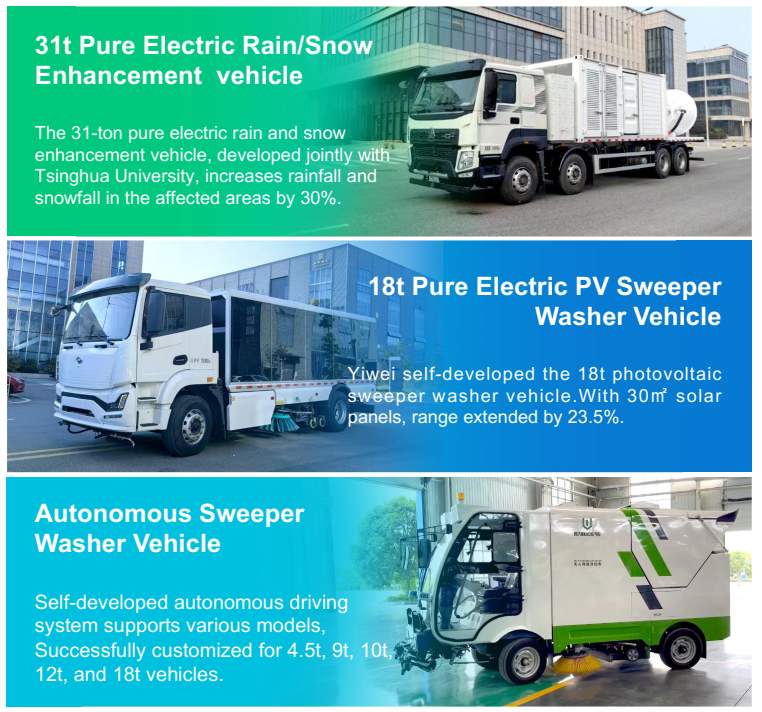
Yiwei is relevant in this discussion not as a competitor to European OEMs, but as a potential engineering partner. Since its founding, in 2018, Yiwei has evolved from quantitative growth to qualitative transformation through sustained R&D and production expansion: over 120 R&D staff, two factories in Chengdu and Hubei with annual capacity exceeding 10,000 units, and market footprints in 20+ countries/regions.
壹为在这一平衡生态体系中的角色
在此讨论中,壹为的定位并非欧洲整车制造商的竞争者,而是潜在的工程合作伙伴。自 2018 年成立以来,壹为通过持续研发投入与产能扩张,实现了从数量增长向质量提升的转型:拥有 120 余名研发人员,在成都与湖北设有两座工厂,年产能超过 1 万辆,并已进入 20 余个国家和地区市场。
Key technical and performance advantages of Yiwei are:
- Modular Electric Chassis (2.7t–31t) Suitable for Co-Integration
Yiwei’s chassis can support European upper-body specialists looking to electrify existing product lines without extended development delays. - Full Vehicle Integration When Required
Offering complete chassis + upper-body packages for markets where this approach is efficient — but still leaving ample space for European partners to supply localized or specialized equipment. - Multi-Climate Reliability
Useful for European markets with significant seasonal variation. - Co-development Potential
Yiwei’s engineering teams can adapt chassis geometries, interfaces, and electronic systems to match European integrators’ requirements, rather than imposing fixed designs. - Export experience and readiness for European standards
Facilitating smoother homologation when co-developed with European partners.
壹为的关键技术与性能优势包括:
- 适用于联合集成的模块化电动底盘(2.7 吨–31 吨)
支持欧洲上装企业在不延长研发周期的情况下,对既有产品线进行电动化。 - 在必要时提供整车集成能力
在适合的市场中提供“底盘 + 上装”的完整方案,同时为欧洲合作方保留本地化与专业化空间。 - 多气候条件下的可靠性
适用于季节变化显著的欧洲市场。 - 具备联合开发潜力
工程团队可根据欧洲集成商需求,调整底盘结构、接口及电子系统,而非强制使用固定设计。 - 出口经验与欧洲标准适配能力
在与欧洲合作伙伴联合开发的情况下,有助于更顺畅地推进认证流程。
Where This Creates Value in Europe
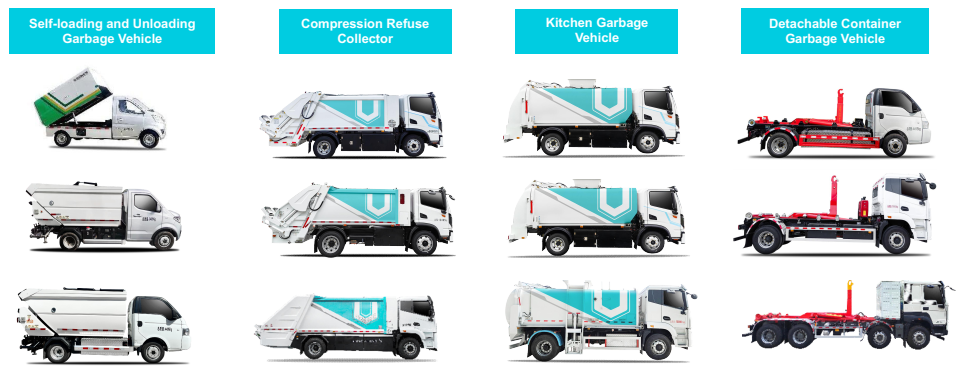
- Municipal service vehicles
- Airport ground support equipment
- Port and industrial fleet electrification
- Last-mile delivery platforms
- Multi-purpose utility vehicles for public administration
In each of these areas, value is generated through cooperation:
Chinese chassis options + European upper-bodies, engineering, safety systems, digital platforms, and final integration.
在欧洲创造价值的应用场景
- 市政服务车辆
- 机场地面支持设备
- 港口与工业车队电动化
- 末端配送平台
- 公共管理部门使用的多功能公用车辆
在上述各领域,价值通过合作实现:
中国底盘选项 + 欧洲上装、工程、安全系统、数字平台与最终集成能力。
Conclusion
Fleet electrification is an area where industry collaboration can reduce emissions, lower public expenditure, and expand innovation capacity on both — Europe and China sides.
Europe’s transition toward electric utility fleets is accelerating. Municipalities, airports, and industrial operators need reliable, customizable, cost-efficient EV solutions — and they need them quickly.
European manufacturers remain central to this transition. Their engineering, quality, and sector-specific expertise are irreplaceable.
Partnerships with Chinese EV chassis providers like Yiwei can expand technical possibilities, provide flexible modular foundations, and support faster deployment — while preserving and enhancing Europe’s high-value industrial role.
By facilitating transparent, technical, and standard-driven cooperation between European and Chinese companies, CNEUCN supports a constructive and balanced industrial ecosystem, where each side brings its strengths, respect European industrial interests, strengthen supply chains, and accelerate decarbonization in a balanced, mutually beneficial way.
结论
车队电动化是一个通过产业协作即可实现减排、降低公共支出并拓展创新能力的关键领域。
欧洲向电动公用车队转型的步伐正在加快。市政部门、机场与工业运营方需要可靠、可定制、具成本效益的电动车解决方案,且需求具有紧迫性。
欧洲制造商在这一转型中仍居核心地位,其工程能力、质量体系与行业专长不可替代。
与壹为等中国电动底盘提供方的合作,可拓展技术路径,提供灵活的模块化基础,并支持更快速的部署,同时保持并强化欧洲高附加值产业角色。
通过推动透明、技术导向、以标准为基础的中欧企业合作,CNEUCN 致力于构建一个平衡、互利、尊重欧洲产业利益、强化供应链并加速脱碳进程的产业生态体系。
 ZH
ZH