
Strengthening Sino–European Cooperation: CNEUCN contribution by its academicians and industry experts’ group (Part I)
加强中欧合作:CNEUCN 由其学术成员与行业专家团队所作的贡献(第一部分)
Introduction
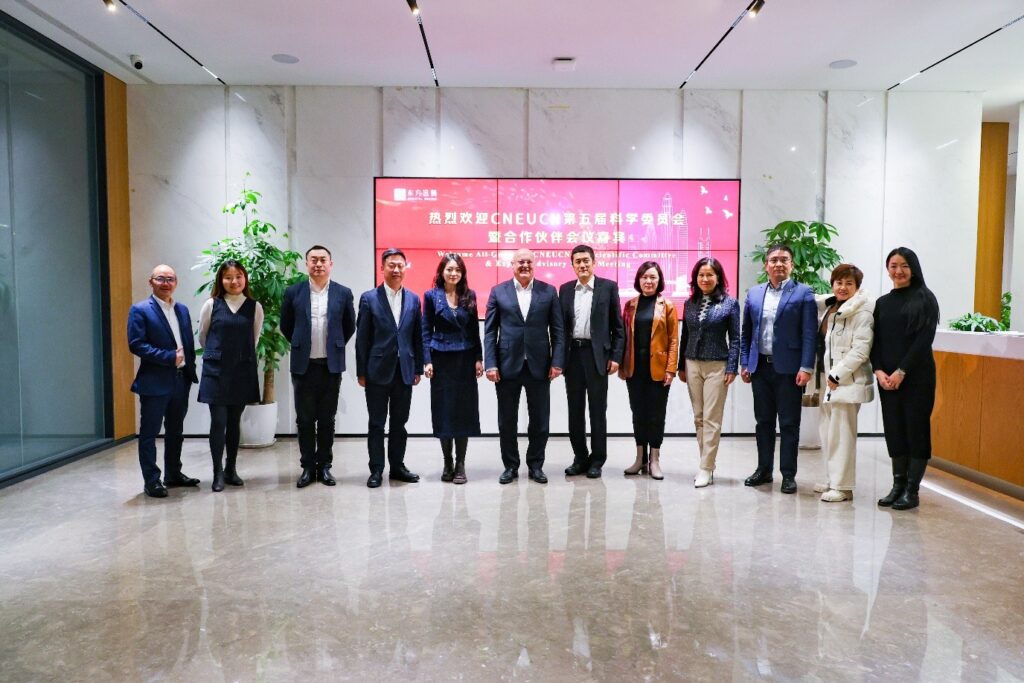
On 4th December, CNEUCN convened its 5th Annual Scientific Committee and Industry Experts Plenary Meeting in a hybrid format: online via Tencent Platform and in-person at the offices of Beijing Oriental Senter (BOS) in Beijing. The session gathered participants from across China, Europe, and other regions, reflecting both the renewed momentum of in-person collaboration and the global scope of our network.
In this first edition of the meeting report, we share highlights from opening remarks, leadership addresses, new member introductions, and the main feature presentation — setting the stage for further dialogues, technical briefings, and collaboration plans. Next week, the second release, will follow, covering additional presentations, discussion summaries, and an action roadmap for 2026 and beyond.
引言
12月4日,CNEUCN 以线上(腾讯会议)与北京东方迅腾(BOS)线下会场相结合的方式,召开了第五届科学委员会暨行业专家全体大会。会议吸引了来自中国、欧洲及其他地区的成员参与,反映出线下合作重启的积极动能,以及本网络不断扩大的国际影响力。
在本次会议纪要的第一期中,我们将分享开场致辞、领导发言、新成员介绍以及重点专题演讲的亮点内容——为后续的深入讨论、技术分享与合作规划奠定基础。第二期报告将于下周发布,涵盖更多演讲内容、讨论总结以及2026年及未来的行动路线图。
Opening Remarks — Strengthening the Network’s Foundation
The meeting was opened by the Committee Secretary General, Massimo Bagnasco, who welcomed all members, partners, and special guests. He remarked that after years of fully online sessions, the Committee is now transitioning toward greater in-person engagement — a powerful signal of growing trust and deepening commitment across the network.
Reflecting on 2025, Bagnasco reviewed a rich and diversified agenda:
• Participation in major conferences, with the 6th Green Building Construction Forum in Beijing (September 2025) as a key highlight;
• Several training sessions in collaboration with leading institutions — including Fudan University and others — to build capacity on sustainable design, green building standards, and low-carbon development;
• Support to a high-level provincial delegation from Sichuan visiting Germany, promoting cross-regional learning and fostering Sino-European exchange;
• Multiple business-development missions across China, exploring new opportunities and reinforcing existing partnerships;
• Continued development and dissemination of the Family Village concept — integrating sustainability, community, and design;
• Growth of the Medelhan platform and setting up of the “Bespoke” concept service enabling custom-made interior and furniture solutions through top-level manufacturers — illustrating synergy between architecture, design, and high-quality manufacturing.
In addition to these established areas, he highlighted several emerging, technology-driven prospects now being explored within CNEUCN’s ecosystem:
• An Italian company is developing a portable, modular orbital launcher capable of placing micro- and nano-satellites (up to 50 kg) into Low Earth Orbit (LEO). The system aims for affordable launch costs, with mobile launch pads and control stations deployable worldwide, and short production cycles enabling frequent launches. This initiative is now moving to large-scale testing and seeking business and financial partners.
• A Sino–German joint venture based in Jiaxing is working on low-altitude economy technologies. They have developed drones for high-rise building façade maintenance, photovoltaic (PV) panel–cleaning drones, and urban mobility solutions — demonstrating how new mobility and maintenance technologies intersect with building and urban renovation.
• The newly founded Yiwei New Energy Vehicle Innovation Center, focusing on special-purpose new-energy vehicles tailored for city management needs (e.g. waste collection, street cleaning, airport services) — showing how urban services and green mobility are becoming substantial part of the CNEUCN agenda.
According to Bagnasco, these developments illustrate the mature ecosystem of cooperation within CNEUCN — that spans design, urban renewal, energy, mobility, waste & water, technology, and sustainable infrastructure.
开场致辞——夯实网络合作的基础
委员会秘书长Massimo Bagnasco宣布会议正式开始,并欢迎全体成员、合作伙伴及特邀嘉宾。他表示,经过数年的全线上会议,本委员会正逐步回归更多线下参与——这一趋势代表着网络内部信任的增强与合作承诺的深化。
回顾2025年,Bagnasco对一系列丰富多元的活动进行了总结:
• 参与多场重要会议,包括2025年9月第六届绿色建筑建造论坛(北京);
• 与复旦大学等机构合作开展多项培训,聚焦可持续设计、绿色建筑标准与低碳发展;
• 支持四川省高级别代表团前往德国交流;
• 在中国多地开展商务发展任务,探索合作新机遇;
• 推动“家族村”可持续社区概念的传播与试点;
• Medelhan平台扩展,并推出“Bespoke”高端定制化设计合作服务。
此外,他分享了 CNEUCN 正在探索的多个前沿技术方向:
• 一家意大利公司正在研发一套可携式、模块化的轨道发射系统,可将最高50公斤的微型与纳米卫星送入近地轨道(LEO)。该系统以低成本发射为目标,配备可全球部署的移动式发射平台与控制站,并通过短周期生产能力实现高频发射。目前,该技术正进入大规模测试阶段,并面向产业界与金融领域寻求合作伙伴。
• 位于嘉兴的中德合资企业正在布局低空经济创新技术,已研发包括:—高层建筑外立面运维无人机、光伏组件清洁无人机—以及多类面向城市的智慧出行解决方案。这些成果展示了新型低空作业与移动技术如何与建筑更新和城市治理深度融合,为未来城市综合运维提供新的技术路径。
• 新成立的壹为新能源汽车创新中心聚焦城市管理专用NEV车辆。新成立的壹为新能源车辆创新中心专注研发面向城市管理场景的专用新能源车辆,覆盖垃圾收运、道路清洁、机场保障等多类城市服务需求。这表明绿色交通与城市公共服务装备正逐步成为CNEUCN工作的重要组成部分,并为城市低碳治理提供可规模化的解决方案。
在他看来,这些发展趋势展现出CNEUCN已形成覆盖设计、城市更新、能源、交通、废物与水资源管理、科技与可持续基建的成熟合作生态。

The leadership Perspectives — Vision for the Future
European Reflection — Five Years of Collaboration and New Horizons
Prof. Michele Bonino, Co-Chairman, for the European side, of the Scientific Committee, delivered a thoughtful address, reflecting on five years of cooperation. Recognizing the expansion of CNEUCN’s network, he underscored the deeper intellectual and practical value created through co-creation — bridging academia, industry, design, and policy.
In an increasingly complex geopolitical landscape, Prof. Bonino argued, China–Europe collaboration can no longer rely solely on traditional academic exchanges. Instead, an agile, horizontal cooperation model like that of CNEUCN is essential — allowing diverse actors to come together across disciplines, geographies, and sectors to generate new knowledge and solutions. As he put it:
“If I consider the universities, sometimes we keep our view a little bit to focus in our academic activity. While reality as CNEUCN seems to be very agile in creating this horizontal cooperation of new knowledge.”
Prof. Bonino highlighted the centrality of cities in the decarbonization agenda. Urban areas, he noted, are where technology, governance, data, infrastructure, and human behaviour converge — making them the frontlines of sustainable transformation.
He pointed to the upcoming meeting of the 100 Climate Neutral Cities Forum — scheduled in Turin, May 2026 — and encouraged CNEUCN members to engage, share insights, and contribute to the shaping of urban decarbonization strategies at European scale.
His remarks reinforce a key principle: decarbonization is not purely a technical issue, but a social and governance challenge — requiring data-driven urban planning, citizen participation, cross-level governance, and integrative thinking.
领导致辞——面向未来的愿景
欧洲方面的回顾——五年合作与新的愿景展望
科学委员会欧洲主席Michele Bonino教授发表了深刻的讲话,回顾了五年来的合作历程。他指出,随着CNEUCN网络的不断扩大,通过共创所产生的知识价值与实践成果正在持续深化,实现了学界、业界、设计界与政策体系之间的跨界连接。在当前地缘政治日益复杂的背景下,Bonino教授强调,中欧合作不能再仅依赖传统的学术交流模式。相反,像CNEUCN这样灵活、横向、跨学科的合作模式至关重要,使来自不同地域、不同领域的参与者能够共同产生新知识与解决方案。正如他所说:“在大学体系中,我们的视野往往局限于自身的学术活动,而CNEUCN展现出的跨界连接能力则更加灵活,能够推动新知识的横向生成。”
Bonino教授特别强调了城市在脱碳议程中的核心地位。他指出,城市是技术、治理、数据、基础设施与人类行为交汇之处,因此成为推动可持续转型的前沿阵地。
他特别提到将于2026 年5月在都灵举行的“100 个气候中和城市论坛”,并鼓励CNEUCN成员积极参与、贡献见解,共同推动欧洲城市脱碳战略的形成。
他的观点再次强调:脱碳不是单纯的技术问题,更是社会与治理层面的挑战,需要数据驱动的城市规划、公众参与、多层级治理与综合性思维。
Welcoming New Members — Expanding our Multidisciplinary Capacity
Three new partners officially joined the CNEUCN core team along 2025. Their inclusion further strengthens our capacity across sustainable urban renewal, zero-carbon planning, certification, design, and construction.
NORDiQ Engineering Consulting (Beijing) Co., Ltd. — a wholly owned subsidiary of the Danish NORDiQ Group, with headquarters in Copenhagen and branches in Aarhus, Holstebro, and Beijing. Their strengths in strategic planning, overseas market insights, and project implementation promise to bolster CNEUCN’s capacity to deliver low-carbon park and district projects in China and abroad.
RINA — originally founded in Genoa, Italy in 1861 (as Registro Italiano Navale), RINA has grown into a global private multinational corporation with operations in approximately 70 countries and 200 offices. Its activities include energy, marine, infrastructure, real estate, testing, inspection, certification, and — increasingly — sustainability consulting and decarbonization research. With its “Open Innovation Hub” and “AI Factory” in Singapore, and planned expansion into aerospace and data centers, RINA brings crucial compliance, safety, and sustainability capabilities to the CNEUCN network.
Beijing Oriental Senter (BOS) — founded in 2008 as a decoration provider, BOS has evolved substantially. By 2016 it became operationally independent, and since 2020 it has integrated Singaporean design-alliance resources — enabling it to deliver high-end workplace, hospitality, retail, and large-scale urban design projects. Their track record includes award-winning hotels, super-mansion developments, retail and office complexes — all with high standards of green design, intelligent building systems, and sustainable construction.
The special guest, Willy Zhang — General Manager of Liebherr, and key organizer of the 2025 Green Building Construction Forum. Mr. Zhang expressed strong willingness to deepen cooperation with CNEUCN, offering promising industrial channels for future collaboration around sustainable construction, building technologies, and green materials.
Together, these new partners expand CNEUCN’s reach across planning, certification, design, construction, manufacturing, and industrial sustainability — demonstrating our ambition to build a truly integrated Sino-European network across the entire lifecycle of decarbonization sustainable urban development.
欢迎新成员加入——拓展多学科合作能力
2025 年,三家新机构正式加入CNEUCN核心团队。
他们的加入将进一步增强我们在可持续城市更新、零碳规划、认证体系、设计与建设等领域的能力。
诺蒂奇工程设计咨询(北京)有限公司 – 作为丹麦诺蒂奇集团的全资子公司,其在战略规划、海外项目经验与实施能力方面具有明显优势,将帮助CNEUCN在中国及海外推进更多低碳园区与区域项目。
意大利船级社(中国)有限公司 – RINA最早成立于 1861 年的意大利热那亚,如今已发展为在约70个国家拥有200个办公室的全球化跨国企业。其业务涵盖能源、海事、基础设施、房地产、测试、检验与认证,并逐步拓展至可持续咨询与脱碳研究领域。其在新加坡设有“开放创新中心”和“AI 工厂”,并计划向航天与数据中心等新领域拓展,为CNEUCN带来关键的合规、安全与可持续能力。
北京东方迅腾(BOS)– 东方迅腾成立于2008年,最初从事装饰业务,2016年实现独立运营,2020年起整合新加坡设计联盟资源,能够交付高端办公、酒店、商业与大型城市设计项目。其项目多次获得重要奖项,并以绿色设计、智能建筑系统与可持续建筑品质著称。
特邀嘉宾: 张伟宏先生– 张先生(利勃海尔集团中国区总经理)作为2025年绿色建筑建造论坛的主要组织者之一,表达了与CNEUCN深化合作的强烈意愿,为未来在绿色建造、建筑技术与绿色材料等领域展开产业合作提供了广阔空间。
这些新伙伴的加入,使CNEUCN在规划、认证、设计、建造、制造与产业可持续性领域形成更加完整的体系,展示了我们构建真正的中欧可持续城市发展全链路网络的雄心。
Feature Presentation: “Revitalizing Cities, Shaping the Future” — Beijing Oriental Senter’s Vision
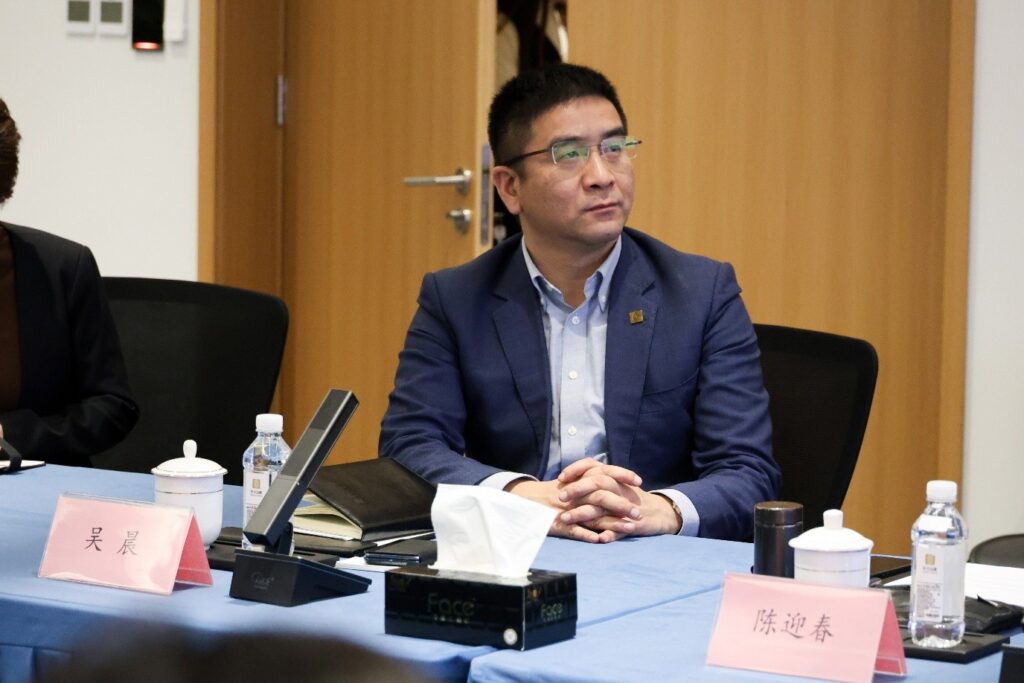
A central highlight of this year’s meeting was a presentation by Oriental Senter, delivered by Ms. Chen Yingchun. Under the title “Revitalizing Cities, Shaping the Future”, the presentation laid out an inspiring and comprehensive vision for urban renewal — bridging design philosophy, structural renovation, ecological sensitivity, cultural heritage, and modern sustainability.
专题演讲:《激活城市·面向未来》— 北京东方迅腾的城市更新愿景
本年度会议的核心亮点之一,是由北京东方迅腾(BOS)陈迎春女士带来的专题演讲《激活城市·面向未来》。该分享系统呈现了东方迅腾在城市更新领域的整体愿景,以设计理念、结构改造、生态敏感性、文化传 承与现代可持续框架为核心,构建出一个多维度、具前瞻性的城市更新方法论。
Core Philosophy & Integrated Methodology
Oriental Senter emphasized a holistic approach combining building renewal, structural rehabilitation, spatial upgrading, and indoor ecological enhancement. Their work draws from three guiding principles: Timeliness, Geographical Advantage, and Human Harmony — an approach rooted in traditional Eastern wisdom but fully compatible with contemporary sustainable design needs.
• Timeliness: Projects are aligned with current urban development trends and national policy directions — ensuring relevance and long-term sustainability.
• Geographical Advantage: Each project is tailored to regional characteristics, natural context, and spatial conditions — respecting local identity while delivering high-quality design.
• Human Harmony: Emphasizing emotional value, cultural identity, social cohesion, and human-centered living environments.
Through a dual approach of artisan craftsmanship + innovative R&D, BOS is pushing boundaries in material systems, prefab construction, high-performance building envelopes, energy-efficient MEP systems, PM2.5 filtration, and digital collaborative management — all while balancing cost, time, and policy constraints.
核心理念与综合方法论
东方迅腾强调以整体性视角推进城市更新,将建筑更新、结构修复、空间提升与室内生态改善有机结合。他们的实践基于三项东方哲学与当代设计并行的核心原则:天时、地利、人和,既承袭传统智慧,又充分适配当下可持续设计的技术路径。
• 天时(Timeliness):项目需顺应城市发展的时代趋势与国家政策方向,确保长期价值与可持续意义。
• 地利(Geographical Advantage):每个项目都需结合区域特点、自然环境与空间条件进行定制化设计,在尊重场地精神的基础上呈现高品质成果。
• 人和(Human Harmony):强调情感价值、文化认同、社区凝聚力与以人为本的空间体验。
在工匠精神与创新研发“双轮驱动”下,BOS正持续突破材料体系、装配式建造、高性能建筑围护结构、节能机电系统(MEP)、PM2.5 空气过滤、数字协同管理等技术边界,并在成本、周期与政策要求之间实现优雅平衡。
Showcase Projects — Demonstrating Sustainable Urban Renewal
Ms. Chen highlighted several exemplary projects that manifest BOS’s philosophy, among the others:
• Beijing Jingying International Center — an archetype of market-to-mixed-use transformation, achieving WELL Platinum and LEED Gold certifications;
• Hohhot Cader Nuohlemule Center — introducing a youth-oriented indoor oasis to reactivate a post-pandemic commercial environment;
• IBG International School — setting a new green standard for educational building retrofits;
• Tsinghua Tongzhou Dormitory — blending industrialized construction with “Beijing Memory” heritage; Hangzhou Fayan Ancient Village — demonstrating low-impact, landscape-driven revitalization.
These examples illustrate the emerging Chinese paradigm of “cultural continuity + ecological enhancement + low-carbon technology.”
示范项目 —— 可持续城市更新的实践呈现
陈迎春女士展示了多个体现东方迅腾理念的代表性项目,包括但不限于:
• 北京京印国际中心 — 市场物业向复合型空间转化的标杆项目,获得 WELL 白金认证与 LEED 金级认证;
• 呼和浩特凯德诺和木勒中心 — 通过“青年友好型室内绿洲”重启疫情后商业空间活力;
• 爱之园国际幼儿园 — 以绿色高性能标准引领教育建筑更新;
• 清华通州学生公寓 — 实现装配式建造与“北京记忆”文化元素的结合;
杭州法云古村 — 以低干预、景观引导方式实现乡村活化与文化延续。
这些项目共同展示了中国城市更新逐步形成的一个新范式:
“文化延续 + 生态提升 + 低碳技术”的综合更新路径。
Toward a Future Urban Renewal Model: Ecology, Heritage & Digital Governance
Ms. Chen proposed that the greatest challenge in urban renewal is balancing the constraints of legacy structures, policy regimes, cost and scheduling, with ambitions of sustainability, cultural sensitivity, and social value. To address this, BOS advocates for a forward-looking model that leverages:
• Digital Twin technology — for pre-renewal assessment, construction process management, and post-renewal operation & maintenance — enabling better control, quality assurance, and carbon-emission transparency;
• Cultural heritage preservation + community engagement — ensuring that renewal projects deliver not only technical and environmental value, but also social and cultural resilience;
• Smart materials, energy-efficient envelopes, prefab components, high-performance MEP systems, air-quality control (e.g. PM2.5), and digital collaborative management — combining comfort, sustainability, and long-term operational efficiency.
未来城市更新模式:生态·文化·数字治理的融合
陈迎春女士指出,当前城市更新最大的挑战在于如何平衡:既有建筑结构限制、政策制度框架、成本与施工周期,与可持续、文化敏感性和社会价值等更高目标之间的矛盾。为破解这一系统性难题,东方迅腾提出了一个前瞻性的未来城市更新模式,重点依托以下能力模块:
• 数字孪生技术(Digital Twin)
• 用于更新前评估、施工过程管理、更新后运营维护,实现更优的质量控制与碳排放透明度。
• 文化遗产保护 + 社区共建
• 确保更新项目不仅具备技术与环境效益,更具备文化韧性与社会价值。
• 智慧材料、节能型围护结构、装配式构件、高性能MEP系统、空气质量控制(如 PM2.5 过滤)、数字化协同管理实现舒适性、可持续性与运营效率的长期统一。
Discussion Highlights — Shared Insights & Emerging Themes
The presentation triggered a rich, multi-dimensional discussion that underlined the strategic importance of urban renewal as a central pillar of sustainable development in both China and Europe. Key points included:
• Industrial heritage & brownfield regeneration: Drawing on experiences from European post-industrial cities and transitional zones, participants — led by Prof. Bonino — argued that many obsolete industrial areas in city cores represent huge opportunities for adaptive reuse and urban regeneration. Through integrated design, policy, community engagement, and ecological renovation, these former single-use sites can be transformed into vibrant, mixed-use, multi-layered urban spaces — thus reactivating underused urban cores.
• Post-occupancy performance & carbon monitoring: Ms. Emily Luo raised an important question: does BOS track actual carbon and energy performance after project completion? BOS responded that operational-phase evaluations can be conducted through specialized consulting partners, opening the door to long-term performance monitoring, carbon accounting, ESG reporting, and data-driven asset management. This underscores a growing demand for post-occupancy validation and sustainability accountability.
• Integration of drone / UAV technologies for maintenance: Mr. Stephen Zhou asked whether the proposed building-renewal innovations could integrate low-altitude drone-based façade and PV-panel cleaning technology — particularly relevant for high-rise buildings and large complexes. BOS confirmed that some urban complexes could pilot such applications, indicating a promising convergence between building-renewal expertise and emerging drone/technology partners within CNEUCN.
• Urgent need for urban regeneration: Bagnasco reiterated that many Chinese cities face over-supply of aging or underperforming building stock, creating urgency for renovation and retrofit rather than new construction. Given environmental pressures, urban growth dynamics, and changing social needs, urban renewal — not just new building — must become a strategic priority. He encouraged members to propose pilot cases where CNEUCN can deploy integrated solutions combining design, materials, MEP systems, digitalization, technology, and community engagement.
These discussions emphasized a shared recognition: urban renewal is not only an architectural or technical challenge — it is a strategic lever for sustainable urban development, cultural preservation, social well-being, and long-term resilience.讨论亮点——共识凝聚与前沿主题的深化
本次分享引发了多维度且富有深度的讨论,再次强调了城市更新在中欧可持续发展战略中的核心地位。主要观点如下:
• 工业遗产与棕地再生(Industrial Heritage & Brownfield Regeneration): 借鉴欧洲后工业化城市与转型区域的经验,与会者(由 Bonino 教授引导)指出,许多位于城市核心区的废弃工业用地蕴藏着被低估的更新潜力。通过综合设计、政策衔接、社区参与与生态修复,这些曾经的单一功能区块完全可以转化为 多功能、复合型、活力充沛的城市空间,从而重新激活被闲置的城市核心区域。
• 后使用绩效与碳排放监测(Post-Occupancy Performance & Carbon Monitoring): 罗岩女士提出关键问题:东方迅腾是否对项目完工后的实际碳排放与能源使用绩效进行跟踪?东方迅腾回应表示,项目在运营阶段的能效与碳排放表现可通过专业咨询机构开展评估,这将为长期绩效监测、碳核算、ESG 报告编制以及数据驱动的资产管理提供实现路径。此点也凸显出行业对于使用后阶段绩效验证以及可持续责任机制的需求正持续上升。
• 无人机(UAV)技术的维护集成(Drone Integration for Maintenance): 周波先生关注城市更新方案能否与 低空无人机系统相结合,用于:幕墙检查与清洁、光伏板清洁、高层建筑运维自动化。东方迅腾表示部分大型城市综合体具备试点条件,并愿意探索此类协同方案。这一方向显示出:建筑更新能力 + 新兴低空技术正在 CNEUCN 体系内形成潜在的创新融合点。
• 城市更新的紧迫性(Urgent Need for Urban Regeneration): Bagnasco指出,中国许多城市正面临老旧或功能低效建筑存量过剩的挑战,与其继续大量新建,更需要将资源投入到:既有建筑翻新、结构性改造、节能提升、数字化升级、社区场景改善。他呼吁成员单位积极提出可试点的案例,使CNEUCN能整合:设计与材料、MEP 系统、数字化技术、低碳解决方案、社区参与模式形成面向城市更新的完整综合方案。
共同的结论:城市更新是一项战略性任务,而不仅是技术工程。
所有讨论意见的汇聚指向一个高度一致的共识:
城市更新不仅是建筑或技术问题,更是推动可持续城市发展、文化传承、社会福祉与长期韧性的战略杠杆。
Closing Thoughts
This first part of the 2025 Annual Meeting report confirms that CNEUCN is entering a new phase: one marked by broad vision, deepening collaboration, and diversified ambition. From traditional domains such as green building and design, the network has expanded into mobility, advanced technologies, urban renewal, heritage preservation, digital governance, and sustainability at scale.
The second newsletter will be issued next week — covering additional technical presentations, full discussion outcomes, and a draft roadmap for 2026–2027.
In the meantime, please do not hesitate to reach out if you would like to share news, suggest projects, or explore collaboration.
结束语
本次2025年度会议纪要(第一部分)表明,CNEUCN正迈入一个全新的发展阶段:以更宏阔的愿景、更深入的合作关系与更具多样化的使命为特征。从以往聚焦绿色建筑与设计等传统领域,网络正在稳步拓展至交通与出行、先进技术、城市更新、文化遗产保护、数字化治理以及更大尺度的可持续发展议题。
第二期Newsletter将于下周发布,内容将涵盖更多技术分享、讨论成果以及2026–2027的初步行动路线图。
在此期间,如您希望分享最新动态、提出合作建议或探索潜在项目,欢迎随时与我们联系。
 EN
EN