
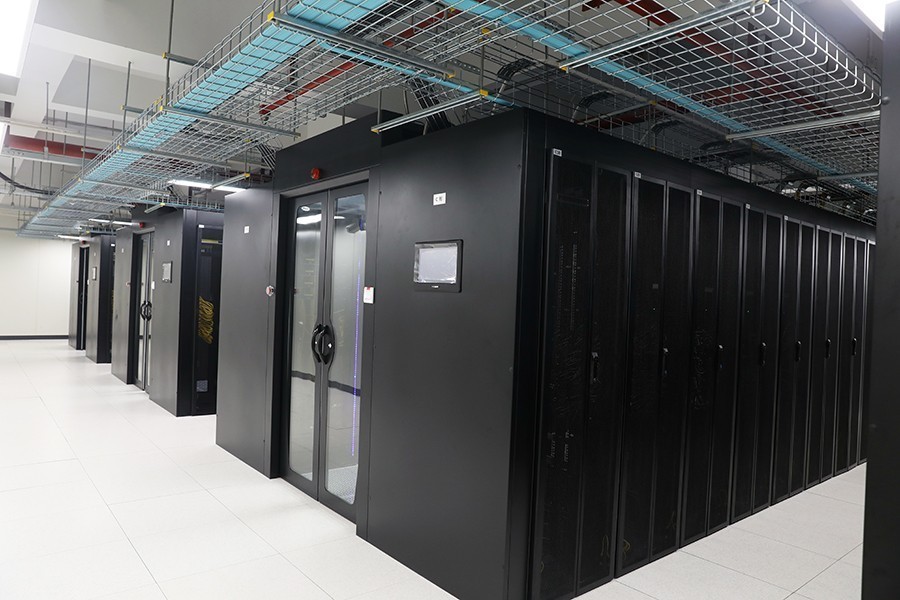
Reducing Energy and Water Consumption Through Efficiency, Smart Infrastructure and Clean Energy
通过能效提升、智能基础设施与清洁能源,降低能源和水资源消耗
Data Centers as Critical Digital Infrastructure
Data centers have become one of the fundamental infrastructures supporting today’s digital economy. They provide the physical environment in which computing, data storage, networking and digital services operate.
A data center is far more than a building filled with servers. It is an integrated infrastructure system combining IT equipment, electricity supply and distribution, cooling, monitoring, automation, security and backup systems.
Its core components generally include servers for data processing and applications; storage and networking systems; power distribution equipment; UPS systems for protection against power interruptions; cooling systems to remove the heat generated by computing equipment; and monitoring and automation systems to manage performance and reliability.
The importance of data centers has increased significantly with the development of cloud computing, artificial intelligence, big data and industrial digitalisation. AI is particularly important because high-performance computing requires significantly greater computing power and increasingly high-density infrastructure. As server and rack power density increases, so do requirements for electricity, cooling and power-management systems.
Data centers therefore sit at the intersection of two major transformations: the rapid expansion of digitalisation and the transition towards a more sustainable energy system.
数据中心:关键数字基础设施
数据中心已成为支撑当今数字经济的基础设施之一,为计算、数据存储、网络与数字服务的运行提供物理环境。
数据中心远不止一栋装满服务器的建筑,而是一套集 IT 设备、电力供应与分配、冷却、监控、自动化、安全及备份系统于一体的综合基础设施体系。
其核心组成部分一般包括:用于数据处理与应用的服务器;存储与网络系统;配电设备;用于抵御电力中断的 UPS 不间断电源系统;用于带走计算设备所产生的热量的冷却系统;以及用于管理性能与可靠性的监控与自动化系统。
随着云计算、人工智能、大数据和产业数字化的发展,数据中心的重要性显著提升。其中人工智能尤为关键 —— 高性能计算需要显著更强的算力,以及日益高密度的基础设施。随着服务器与机柜功率密度的提高,对电力、冷却及电源管理系统的要求也随之上升。
因此,数据中心正处于两大变革的交汇点:一是数字化的快速扩张,二是向更可持续能源体系的转型。
The Environmental Challenge of Data Center Growth
The rapid expansion of data-center infrastructure creates a growing environmental challenge that goes beyond electricity consumption alone.
On the one hand, data centers require enormous and continuously increasing amounts of electricity. According to the National Development and Reform Commission (NDRC), by the end of 2025, China had more than 13.73 million standard racks in operation across its computing infrastructure. These facilities consumed approximately 196 billion kWh of electricity, equivalent to 1.9% of total national electricity consumption. Electricity consumption increased by 18.1% year-on-year, significantly faster than overall social electricity consumption.
On the other hand, data centers can also require substantial quantities of water, particularly for cooling. As computing density increases and more heat needs to be removed from increasingly powerful servers, cooling becomes a critical resource-management issue. This is particularly relevant in a context where water resources are under growing pressure from urbanisation, industrial activity and climate change.
The sustainability challenge for data centers is therefore increasingly two-dimensional: how to reduce the amount of energy required to operate them, while also minimising their consumption of increasingly valuable water resources.
数据中心扩张带来的环境挑战
数据中心基础设施的快速扩张带来了日益严峻的环境挑战,其影响远不止于电力消耗本身。
一方面,数据中心需要巨大且持续增长的电力。据国家发展改革委统计,截至 2025 年底,全国算力基础设施在运行的标准机架数量超过 1373 万架,这些设施年耗电量约 1960 亿千瓦时,相当于全国总用电量的 1.9%。用电量同比增长 18.1%,明显快于全社会用电增速。
另一方面,数据中心也可能消耗大量水资源,尤其是在冷却环节。随着计算密度的提高,需要从功率越来越大的服务器中带走更多热量,冷却便成为关键的水资源管理问题。在城镇化、工业活动和气候变化对水资源造成日益增长压力的背景下,这一问题尤为突出。
因此,数据中心的可持续性挑战日益呈现 “双重维度”:既要降低其运行所需的能源消耗,又要尽量减少其对日益宝贵的水资源的占用。
Reducing Water Consumption
Cooling is one of the main areas in which data centers can reduce their environmental footprint beyond electricity efficiency.
Traditional cooling systems can rely heavily on water, particularly where evaporative cooling is used. Potential strategies for reducing water consumption include the adoption of closed-loop cooling systems, which minimise the need for continuous freshwater input; water recycling and reuse, which can reduce dependence on freshwater resources; and more advanced liquid-cooling technologies, which can improve heat-transfer efficiency for high-density computing environments.
Where climatic and operational conditions allow, air-based or free-cooling solutions can further reduce dependence on water-intensive cooling processes. At the same time, intelligent monitoring and control systems can optimise cooling according to real-time computing loads, avoiding unnecessary resource consumption.
As AI increases computing density, improving cooling efficiency while reducing water intensity will become an increasingly important component of sustainable data-center design.
降低水资源消耗
冷却系统是数据中心在电力效率之外,能够减少环境足迹的主要领域之一。
传统冷却系统可能在很大程度上依赖水资源,尤其是在采用蒸发冷却的情况下。降低耗水量的可行策略包括:采用闭环冷却系统,最大限度地减少对持续补充淡水的需求;水循环利用与回用,减少对淡水资源的依赖;以及更先进的液冷技术,可在高密度计算环境中提高换热效率。
在气候与运营条件允许的情况下,基于空气的冷却或自然冷却(免费冷却)方案可进一步降低对耗水型冷却工艺的依赖。与此同时,智能监控与控制系统可根据实时计算负载优化冷却策略,避免不必要的资源消耗。
随着人工智能提升计算密度,在降低用水强度的同时提高冷却效率,将成为可持续数据中心设计中日益重要的组成部分。
Managing the Growing Energy Demand
Energy represents an even broader challenge because data centers operate continuously and require highly reliable power.
Their electricity consumption does not come only from servers. Power is also required for cooling, UPS systems, transformers, switchgear, power conversion, lighting, monitoring and other supporting infrastructure.
Cooling is particularly significant because increasing computing density generates more heat. At the same time, electricity can be lost at multiple stages as it moves from the grid to IT equipment. Transformers, UPS systems, switchgear and distribution equipment all influence the overall efficiency of the facility.
For operators, improving energy efficiency therefore creates three interconnected benefits:
Lower energy consumption → Lower operating costs → Lower carbon emissions
The challenge is particularly complex for existing data centers. Older facilities may have relatively high Power Usage Effectiveness (PUE) values and may require substantial investment to improve their energy performance. Physical constraints, available space, structural loading and existing electrical capacity can further complicate retrofits.
Energy efficiency is therefore no longer simply a technical issue. It increasingly involves capital investment, operational expenditure, infrastructure planning, resilience and long-term competitiveness.
This is where high-efficiency electrical infrastructure, digital energy management, advanced cooling technologies and renewable-energy integration can make a significant difference. Leading technology companies are already developing and deploying solutions across these different areas. ABB, for example, is implementing a broad portfolio of technologies designed to reduce energy losses, improve operational efficiency and help data centers manage their rapidly growing power requirements.
应对日益增长的能源需求
能源是一个更为宏观的挑战,因为数据中心需要持续运行,并且对供电可靠性要求极高。
数据中心的电力消耗并不只来自服务器。冷却系统、UPS 不间断电源、变压器、开关设备、电源转换、照明、监控及其他配套基础设施同样需要用电。
冷却环节尤为关键,因为计算密度的提升会产生更多热量。与此同时,电力从电网输送到 IT 设备的过程中,会在多个环节产生损耗。变压器、UPS、开关设备和配电设备都会影响设施的总体效率。
因此,对运营商而言,提升能效可带来三重相互关联的收益:
降低能耗 → 降低运营成本 → 降低碳排放
对于存量数据中心而言,这一挑战尤为复杂。老旧设施可能具有相对较高的电能使用效率(PUE)值,需要大量投资才能改善其能效表现。物理空间受限、可用空间不足、结构承重以及既有电力容量等问题,都可能使改造工程更加复杂。
因此,能效已不再只是一个技术问题,它日益涉及资本投入、运营支出、基础设施规划、韧性与长期竞争力。
这正是高效电力基础设施、数字化能源管理、先进冷却技术以及可再生能源整合能够发挥重要作用的领域。领先的科技企业已在上述各领域开发并部署相关解决方案。例如,ABB 正在实施一整套技术组合,旨在减少能源损耗、提升运营效率,并帮助数据中心管理其快速增长的电能需求。
ABB Solutions for More Efficient Data Centers
ABB’s data-center portfolio illustrates how electrical infrastructure, digital technologies, efficient cooling and clean-energy solutions can work together to improve efficiency without compromising reliability.
High-Efficiency Power Distribution
Efficient power distribution is fundamental to reducing energy losses across a data center.
ABB provides transformers, medium- and low-voltage switchgear, circuit breakers, busways and remote power panels designed to combine reliability, scalability and high efficiency. Digital monitoring solutions add real-time visibility into electricity consumption, helping operators identify inefficiencies and optimise capacity and maintenance.
High-Efficiency UPS Systems
UPS systems protect critical IT infrastructure, but power conversion also creates energy losses.
ABB’s MegaFlex DPA and HiPerGuard UPS systems are designed to minimise these losses. The MegaFlex DPA range offers modular power protection from 1,000 kW to 2,000 kW, with system efficiency of up to 97.6%.
ABB’s 34.5 kV HiPerGuard medium-voltage UPS can connect AI data centers directly to the grid without an additional voltage-conversion stage, potentially reducing conversion losses while facilitating the integration of batteries and renewable energy.
Digital Energy Monitoring
Efficient equipment delivers greater value when operators can see how the entire system is performing.
ABB Ability™ Energy and Asset Manager provides visibility into energy consumption, equipment condition and operational performance, helping operators identify inefficiencies, optimise operation and support predictive maintenance.
At the Kangsheng Data Center in Beijing, ABB combined high-efficiency electrical infrastructure with digital energy and asset-management solutions, demonstrating how digitalisation can support both energy efficiency and reliability.
More Efficient Cooling
Cooling is one of the largest opportunities for reducing data-center energy consumption, particularly as AI increases computing density.
ABB provides high-efficiency motors and variable-speed drives for pumps, fans and compressors, allowing cooling systems to adapt to actual demand rather than operating continuously at full capacity.
ABB’s Ultra-Low Harmonic (ULH) drives can further support energy efficiency and power quality, helping cooling infrastructure respond more efficiently to changing computing loads.
Renewable Energy and Energy Storage
Energy efficiency reduces consumption, while renewable energy can reduce the carbon intensity of the electricity that remains.
ABB provides solutions covering microgrids, battery energy storage and renewable-energy integration, enabling data centers to use and manage clean energy more flexibly.
The HiPerGuard architecture also supports the integration of battery storage and renewable energy, together with functions such as peak shaving and grid support.
Together, these technologies can help transform the data center from a passive electricity consumer into a more flexible and intelligent energy system.
ABB 面向更高效数据中心的技术方案
ABB 的数据中心产品组合展示了电力基础设施、数字技术、高效冷却与清洁能源方案如何协同作用,在保障可靠性的前提下提升效率。
高效配电
高效的电力分配是降低数据中心整体能量损耗的基础。
ABB 提供变压器、中低压开关设备、断路器、母线槽及远程配电面板,兼顾可靠性、可扩展性与高效率。数字化监控方案可实时掌握用电情况,帮助运营商发现低效环节,优化容量配置与维护策略。
高效 UPS 不间断电源系统
UPS 系统保护关键 IT 基础设施,但电源转换本身也会产生能量损耗。
ABB 的 MegaFlex DPA 与 HiPerGuard UPS 系统旨在最大限度减少此类损耗。MegaFlex DPA 系列提供 1,000 kW 至 2,000 kW 的模块化电力保护,系统效率最高可达 97.6%。
ABB 的 34.5 kV HiPerGuard 中压 UPS 可直接将 AI 数据中心接入电网,无需额外的电压转换环节,在降低转换损耗的同时,还有助于电池储能与可再生能源的接入。
数字化能源监控
只有当运营商能够看到整个系统的运行表现时,高效设备才能发挥更大价值。
ABB Ability™ 能源与资产管理平台可提供能耗、设备状态与运行性能的全面可视性,帮助运营商识别低效环节、优化运行并支持预测性维护。
在北京康盛数据中心,ABB 将高效电力基础设施与数字化能源及资产管理方案相结合,展示了数字化如何同时支撑能效提升与可靠性保障。
更高效的冷却系统
冷却系统是降低数据中心能耗的最大机会之一,尤其是在人工智能提升计算密度的背景下。
ABB 为水泵、风机和压缩机提供高效电机与变频驱动器,使冷却系统能够根据实际需求调节运行,而非持续满负荷运转。
ABB 的超低谐波(ULH)驱动器可进一步提升能效与电能质量,帮助冷却基础设施更高效地响应不断变化的计算负载。
可再生能源与储能
能效提升可减少能源消耗,而可再生能源则可降低剩余用电的碳强度。
ABB 提供覆盖微电网、电池储能与可再生能源整合的解决方案,使数据中心能够更灵活地使用和管理清洁能源。
HiPerGuard 架构还支持电池储能与可再生能源的接入,并具备削峰填谷及电网支撑等功能。
这些技术合力,可将数据中心从被动的电力消费者,转变为一个更灵活、更智能的能源系统。
Outlook: Building More Resource-Efficient Data Centers
Data centers will remain an essential physical foundation of the digital economy. Their expansion will support AI, cloud computing, industrial digitalisation and a growing range of emerging technologies.
But this expansion comes with a clear environmental responsibility. Increasing computing capacity means increasing demand for electricity and cooling, while water availability is becoming an increasingly important constraint in many regions.
The next generation of data centers will therefore need to focus not on a single sustainability indicator, but on the efficient management of energy, water and infrastructure as an integrated system.
China’s policy direction increasingly places data centers within the broader framework of energy conservation, carbon reduction and renewable-energy development. The NDRC highlights a pathway based on improving PUE, increasing renewable-energy utilisation and strengthening carbon management.
For data-center operators, the challenge is therefore becoming clear: support the exponential growth of digital infrastructure while using fewer resources to deliver each unit of computing capacity.
Technologies that combine high-efficiency electrical infrastructure, intelligent monitoring, advanced cooling, renewable energy and energy storage will be central to achieving this objective.
The future of digital infrastructure will not only be defined by how much computing power data centers can deliver, but by how efficiently and responsibly they can deliver it.
展望:打造资源利用更高效的数据中心
数据中心仍将是数字经济不可或缺的物理基石,其扩张将支撑人工智能、云计算、产业数字化以及日益增多的新兴技术。
但这种扩张伴随着明确的环境责任。计算能力的提升意味着对电力和冷却的需求不断增长,而在许多地区,水资源可得性正成为日益重要的制约因素。
因此,下一代数据中心需要关注的不是单一可持续性指标,而是将能源、水资源与基础设施作为一个整体系统进行高效管理。
中国的政策导向日益将数据中心纳入节能、降碳与可再生能源发展的更宏观框架之中。国家发展改革委强调了一条以提升 PUE、提高可再生能源利用率、强化碳管理为基础的路径。
对数据中心运营商而言,挑战因此变得清晰:在支撑数字基础设施指数级增长的同时,用更少的资源交付每一单位计算能力。
将高效电力基础设施、智能监控、先进冷却、可再生能源与储能相结合的技术,将成为实现这一目标的核心。
数字基础设施的未来,不仅取决于数据中心能够交付多少算力,更取决于其能否高效且负责任地完成交付。
#DataCenters #数据中心
#AI #人工智能
#DigitalInfrastructure #数字基础设施
#EnergyEfficiency #能效
#WaterEfficiency #用水效率
#Sustainability #可持续发展
#EnergyTransition #能源转型
#RenewableEnergy #可再生能源
#EnergyStorage #储能
#SmartInfrastructure #智能基础设施
#Digitalisation #数字化
#Decarbonisation #脱碳
#ABB #ABB集团
#China #中国
#GreenDataCenters #绿色数据中心
 EN
EN