

Electrification, hydrogen, and circular feedstocks are converging into integrated industrial systems
电气化、氢能与循环原料正深度融合,形成一体化工业体系
Context
Over the past decade, the global decarbonization agenda has been largely framed through the lens of energy transition. Renewable power deployment, electrification, and efficiency improvements have dominated both policy and industrial strategies. While these developments remain essential, they are no longer sufficient to address the complexity and scale of the climate challenge.
A new phase is emerging—one that extends beyond energy systems and into the structural transformation of industrial ecosystems. In this context, decarbonization is no longer driven by individual technologies, but by the integration of multiple solutions into coherent, large-scale platforms.
Electrification, hydrogen, circular materials, digital optimization, and industrial process innovation are increasingly converging. The result is a shift from fragmented interventions to system-level transformation. As a consequence, the competitive landscape is also evolving: success is no longer determined by technological leadership alone, but by the ability to design, integrate, and operate complex industrial systems.
In this new paradigm, decarbonization is no longer a technology challenge—it is an integration challenge.
背景概述
过去十年,全球脱碳议程主要以能源转型为核心框架。可再生能源推广、电气化与能效提升主导了各国政策与产业战略。尽管这些举措依然至关重要,但已不足以应对气候挑战的复杂性与规模。
一个全新阶段正在到来:它超越能源系统,深入工业生态的结构性转型。在此背景下,推动脱碳的不再是单一技术,而是将多种解决方案整合为协同、规模化的平台体系。
电气化、氢能、循环材料、数字化优化与工业工艺创新正加速融合。其结果是,从分散式干预转向系统级转型。随之而来的是竞争格局的演变:成功不再仅取决于技术领先性,而取决于设计、集成与运营复杂工业系统的能力。
在这一新范式中,脱碳不再是一项技术挑战,而是一项集成挑战。
From Technology Deployment to System Integration
The first phase of decarbonization focused on deploying individual technologies: solar and wind power, electric equipment, carbon capture solutions, and efficiency upgrades. While these interventions have delivered measurable results, they often operate in isolation, limiting their overall impact.
Industrial systems, however, are inherently interconnected. Energy supply, material flows, logistics, and production processes are deeply interdependent. Decarbonizing one component without addressing the others can lead to suboptimal outcomes, increased costs, or even unintended emissions shifts.
The emerging approach therefore emphasizes integration. Instead of optimizing single technologies, companies and governments are now developing multi-layered platforms that combine:
• low-carbon energy generation and distribution
• electrified industrial processes
• hydrogen-based systems for hard-to-abate sectors
• circular feedstocks and waste-to-resource pathways
• digital monitoring and optimization tools
This systemic perspective allows for greater efficiency, resilience, and scalability, while enabling deeper emissions reductions across entire value chains.
从技术部署走向系统集成
脱碳第一阶段的重点是部署单一技术:太阳能与风电、电气化设备、碳捕集解决方案以及能效升级。尽管这些举措取得了可量化的成效,但它们往往孤立运行,整体效果受限。
然而,工业系统本身具有高度互联的特性。能源供应、物料流、物流与生产流程深度相互依存。仅对单一环节脱碳而不兼顾其他环节,可能导致效果不佳、成本上升,甚至出现非预期的排放转移。
因此,新兴模式更加强调集成。企业与政府不再仅优化单项技术,而是开始构建多层级集成平台,融合以下要素:
• 低碳能源生产与配送
• 电气化工业流程
• 面向难减排行业的氢能体系
• 循环原料及废物资源化路径
• 数字化监测与优化工具
这种系统视角能够提升效率、韧性与可扩展性,同时在全价值链中实现更深度的减排。
Industrial Transformation as a Platform Strategy
A clear example of this shift can be observed in the industrial transformation initiatives led by Eni. Through the creation of new structures dedicated to industrial evolution, Eni is redefining the role of traditional energy assets.
Rather than operating as isolated refining or production facilities, these assets are being transformed into integrated energy and circular economy hubs, where multiple processes coexist and interact. These include:
• biofuel production and alternative feedstocks
• circular raw material processing
• integration with downstream industrial applications
• optimization of energy and material flows across the system
This approach reflects a broader transition from linear industrial models to platform-based ecosystems, where value is created through the interaction of multiple technologies and processes.
The objective is not simply to reduce emissions within existing operations, but to redesign the entire industrial architecture in a way that inherently minimizes carbon intensity.
以平台战略推动产业转型
这一转变在埃尼集团(Eni)主导的产业转型项目中体现得尤为明显。通过设立专注于产业升级的全新架构,埃尼正在重新定义传统能源资产的角色。
这些资产不再是孤立的炼油或生产设施,而是转型为一体化能源与循环经济枢纽,多种工艺在此共存并协同运行,包括:
• 生物燃料生产与替代原料
• 循环原料加工
• 与下游工业应用深度集成
• 全系统能源与物料流优化
该模式标志着产业从线性模式向平台型生态系统的广泛转型,价值通过多元技术与流程的协同联动得以创造。
其目标不仅是在现有运营中减排,更是彻底重构整体产业架构,从本质上实现碳强度最小化。
Electrification as the Backbone of Integration
Electrification remains a cornerstone of decarbonization, but its role is evolving. No longer limited to replacing fossil fuel-based systems, electrification is becoming the backbone of integrated industrial platforms.
Global technology leaders such as ABB are advancing solutions that enable the seamless integration of electrification, automation, and digitalization across industrial environments.
These solutions support:
• real-time monitoring and optimization of energy consumption
• coordination between different production units
• integration of renewable energy sources into industrial processes
• improved efficiency and reduced operational costs
By connecting equipment, systems, and data, electrification platforms enable a higher level of operational intelligence. This is essential for managing the complexity of integrated industrial ecosystems, where multiple processes must be synchronized in real time.
In this context, electrification is not merely a decarbonization tool—it is an enabling infrastructure for system integration.
电气化:系统集成的核心支柱
电气化仍是脱碳的基石,但其角色正在升级。它不再局限于替代化石能源系统,正成为一体化工业平台的核心支柱。
ABB 等全球技术领先企业正推动相关解决方案,实现电气化、自动化与数字化在工业场景中的无缝融合。
这些方案支持:
• 能耗实时监测与优化
• 不同生产单元之间的协同调度
• 可再生能源与工业流程的深度融合
• 提升效率、降低运营成本
通过连接设备、系统与数据,电气化平台可实现更高水平的运营智能化。这对于管理一体化工业生态的复杂性至关重要,因为多类工艺必须实现实时同步。
在此背景下,电气化不仅是脱碳工具,更是支撑系统集成的关键基础设施。
Hydrogen and the Expansion of Industrial Ecosystems
While electrification plays a central role, it cannot address all industrial needs. Hard-to-abate sectors such as heavy industry, chemicals, and high-temperature processes require additional solutions. Hydrogen is emerging as a critical component in this regard.
Companies such as Siemens Energy are actively developing integrated systems that combine hydrogen production, storage, and utilization within broader energy infrastructures.
These systems enable:
• decarbonization of high-temperature industrial processes
• integration of renewable energy through power-to-hydrogen pathways
• balancing of energy supply and demand
• creation of flexible and resilient energy networks
Importantly, hydrogen systems are not standalone solutions. Their effectiveness depends on their integration with other components, including renewable energy sources, electrified processes, and digital control systems.
This reinforces the concept of industrial platforms, where multiple technologies must operate in coordination to achieve optimal performance.
氢能与工业生态的拓展
电气化虽占据核心地位,但无法满足所有工业需求。重工业、化工、高温工艺等难减排行业仍需配套解决方案,氢能正成为这一领域的关键组成部分。
西门子能源(Siemens Energy)等企业正积极开发集成系统,将氢能的生产、储存与利用融入更广泛的能源基础设施。
这类系统可实现:
• 高温工业流程脱碳
• 通过电制氢路径实现可再生能源整合
• 能源供需平衡调节
• 构建灵活、高韧性的能源网络
重要的是,氢能体系并非独立解决方案,其效果取决于与可再生能源、电气化工艺、数字控制系统等其他模块的集成程度。
这进一步印证了工业平台理念:多项技术必须协同运行,才能实现最优表现。
The Convergence of Energy and Material Systems
A defining characteristic of the current transition is the convergence between energy systems and material systems. Circular economy principles are increasingly being integrated into industrial platforms, enabling the reuse and transformation of waste into valuable inputs.
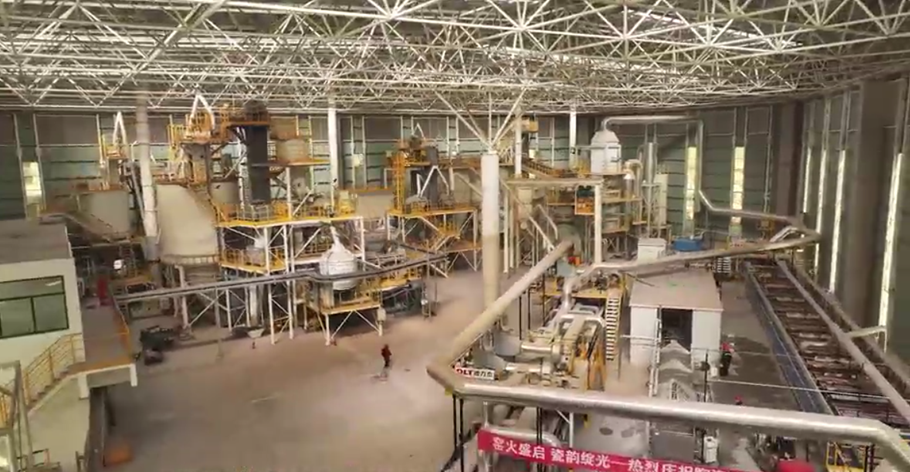
This convergence is particularly relevant for sectors such as construction, where material flows represent a significant source of emissions. Projects such as the Sinoma CDI Wu’an waste cement and steel treatment recycling plant demonstrate how industrial ecosystems can be designed to simultaneously address energy efficiency, material reuse, and emissions reduction.
By integrating waste treatment, material processing, and energy recovery within a single system, such models illustrate the potential of multi-dimensional decarbonization platforms.
This approach reduces reliance on virgin resources, lowers overall carbon intensity, and creates new value streams from previously underutilized materials.
能源系统与材料系统的融合
当前转型的一个标志性特征,是能源系统与材料系统深度融合。循环经济理念正日益融入工业平台,推动废弃物复用与转化,使其成为高价值原料。
这一融合在建筑等行业尤为关键,这些领域的物料流动是碳排放的重要来源。中材 CDI 武安水泥与钢铁废弃物处理循环产业园等项目,展示了如何构建工业生态系统,同时实现能效提升、材料复用与减排。
通过将废弃物处理、材料加工与能源回收集成于同一体系,这类模式充分体现了多维脱碳平台的巨大潜力。
该模式可降低对原生资源的依赖,减少整体碳强度,并从以往未充分利用的材料中创造新的价值流。
A New Competitive Landscape: Ecosystems vs. Companies
As industrial systems become more integrated, the nature of competition is also changing. Traditional competitive dynamics, based on individual products or technologies, are giving way to a new paradigm centered on ecosystems.
In this context, the key differentiators are:
• the ability to integrate diverse technologies into coherent systems
• the capacity to manage complex operational interactions
• the strength of partnerships across the value chain
• the flexibility to adapt to evolving regulatory and market conditions
Companies that can orchestrate these elements effectively will gain a significant competitive advantage. Conversely, those that remain focused on isolated solutions may struggle to remain relevant.
This shift has important implications for both industry players and policymakers, requiring new approaches to strategy, investment, and collaboration.
全新竞争格局:生态体系 vs 单一企业
随着工业系统日趋集成化,竞争本质也在发生改变。以单一产品或技术为核心的传统竞争模式,正让位于以生态体系为中心的全新竞争范式。
在此背景下,核心竞争优势在于:
• 将多元技术集成为协同系统的能力
• 管理复杂运营交互的能力
• 跨价值链合作伙伴关系的强度
• 适应不断变化的政策与市场环境的灵活性
能够有效统筹这些要素的企业,将获得显著竞争优势;反之,仍局限于孤立解决方案的企业可能逐渐失去竞争力。
这一转变对企业与政策制定者均具有重要意义,需要在战略、投资与合作方面采取全新思路。
Industrial and Market Implications
The transition toward integrated industrial platforms presents significant opportunities for collaboration between China and Europe.
China’s strength lies in large-scale implementation, industrial capacity, and rapid deployment of infrastructure. Europe, on the other hand, offers advanced technologies, regulatory frameworks, and expertise in sustainability and system design.
By combining these complementary capabilities, China and Europe can accelerate the development and deployment of integrated decarbonization platforms. Key areas of cooperation include:
• joint development of industrial ecosystem projects
• integration of European technologies into Chinese large-scale applications
• co-creation of standards and certification systems
• investment in cross-border decarbonization initiatives
Such collaboration can play a critical role in scaling up solutions and ensuring their global applicability.
产业与市场影响
向一体化工业平台转型,为中欧合作带来重大机遇。
中国的优势在于大规模实施能力、完整产业体系以及基础设施快速部署。欧洲则拥有先进技术、完善监管框架,以及在可持续发展与系统设计方面的专业经验。
通过整合这些互补能力,中欧可加快一体化脱碳平台的研发与推广。重点合作领域包括:
• 联合开发工业生态项目
• 将欧洲技术融入中国大规模应用场景
• 共同制定标准与认证体系
• 投资跨境脱碳合作项目
此类合作对于扩大解决方案规模、保障其全球适用性至关重要。
Outlook
The global decarbonization agenda is undergoing a fundamental transformation. What began as an energy transition is rapidly evolving into a broader system transition, encompassing energy, materials, and industrial processes.
In this new paradigm, success will depend not only on the development of advanced technologies, but on the ability to integrate them into coherent and scalable platforms. Electrification, hydrogen, circular economy solutions, and digitalization must operate together within complex industrial ecosystems.
The implications are profound. Industrial competitiveness, investment strategies, and international cooperation models will all need to adapt to this new reality.
For CNEUCN and its Partners, this transition represents both a strategic priority. In particular, its mission to bridge technological, industrial, and geographic domains represents a key competitive advantage in a context where integration is the primary challenge.
By leveraging its integrated approach and cross-regional expertise, CNEUCN can play a leading role in enabling the next phase of global decarbonization—one defined not by individual technologies, but by the power of systems.
展望
全球脱碳议程正在经历根本性转变。最初以能源转型为起点的变革,正快速拓展为更广泛的系统转型,覆盖能源、材料与工业流程。
在这一新范式下,成功不仅取决于先进技术的研发,更取决于将其整合为协同可规模化平台的能力。电气化、氢能、循环经济方案与数字化必须在复杂的工业生态中协同运行。
其影响深远:产业竞争力、投资策略与国际合作模式都需要适应这一新现实。
对于CNEUCN及其合作伙伴而言,这场转型是一项战略重点。特别是其搭建技术、产业与地域桥梁的使命,在集成成为核心挑战的背景下,构成了关键竞争优势。
凭借整合式路径与跨区域专业能力,CNEUCN 可在全球脱碳下一阶段发挥引领作用 ——这一阶段的核心不再是单一技术,而是系统的力量。
#SystemTransition #系统转型
#IndustrialDecarbonization #工业脱碳
#EnergyTransition #能源转型
#IntegratedSystems #综合能源系统
#HydrogenEconomy #氢能经济
#Electrification #电气化
#CircularEconomy #循环经济
#ESGStrategy #ESG战略
#Eni #埃尼
#ABB#ABB集团
#SiemensEnergy #西门子能源
 EN
EN