
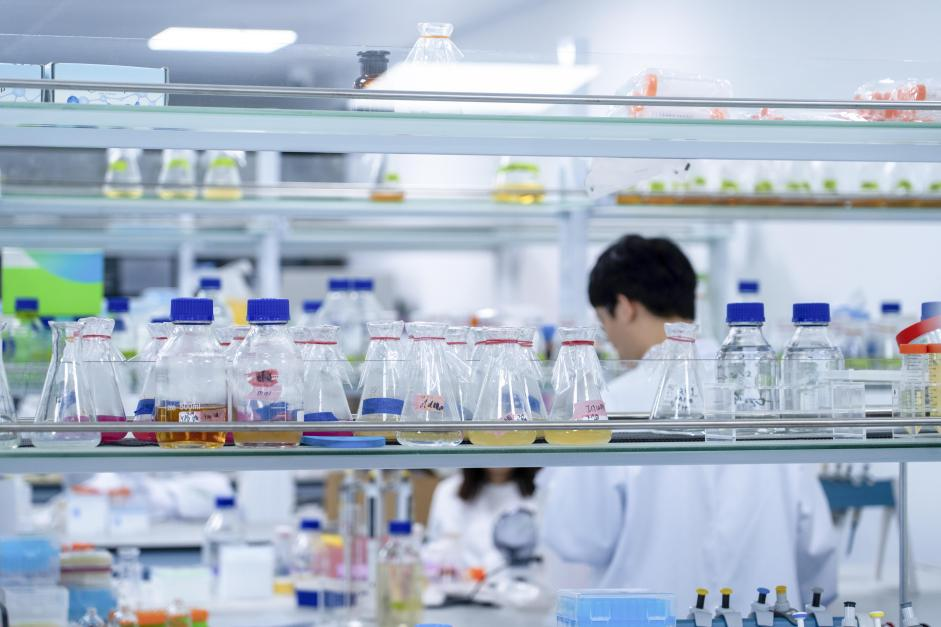
From enzymes to engineered microbes, bio-solutions are rapidly displacing petrochemical processes across global industries
从酶制剂到工程微生物,生物解决方案正在全球各行业快速替代石化工艺
Context
For decades, the global decarbonization agenda has been dominated by the transformation of energy systems. Renewable power, electrification, and efficiency improvements have been widely recognized as the primary levers for reducing emissions. However, a deeper and less visible shift is now gaining momentum—one that targets the very foundation of industrial production: materials.
Across multiple sectors, from chemicals to construction and manufacturing, fossil-based inputs are being challenged not only as energy sources, but as the core building blocks of industrial value chains. This transition is redefining how materials are produced, processed, and utilized, with significant implications for both emissions’ reduction and industrial competitiveness.
At the center of this transformation lies biotechnology. Through the use of enzymes, microorganisms, and bio-based processes, a new generation of solutions is emerging—capable of replacing traditional petrochemical pathways with lower-carbon alternatives. In this context, the next carbon battlefield is not power generation—it is molecular engineering.
背景概述
数十年来,全球脱碳议程始终以能源系统转型为主导。可再生能源发电、电气化及能效提升,已被公认为减排的核心抓手。然而,一场更为深层却不易被察觉的变革正蓄势兴起——这场变革直指工业生产的根基:材料。
从化工、建筑到制造业等多个领域,化石基原料的地位正受到挑战:它不仅不再是首选能源,也逐渐失去在产业链中核心基础原料的主导地位。这场转型正在重塑材料的生产、加工与应用方式,对碳减排和产业竞争力都将产生深远影响。
而生物技术正是这场变革的核心。依托酶制剂、微生物及生物基工艺,新一代技术方案应运而生,以低碳替代路径逐步取代传统石化生产模式。在此背景下,下一个碳中和核心赛道不再是发电领域,而是分子工程。
From Petrochemicals to BioSolutions
Traditional industrial chemistry has long relied on fossil feedstocks. Oil and gas derivatives are deeply embedded in the production of plastics, chemicals, fuels, and a wide range of intermediate materials. While efforts have been made to improve efficiency and reduce emissions within these systems, their fundamental dependence on carbon-intensive inputs remains a structural limitation.
Biotechnology offers a different approach. By leveraging biological processes, it becomes possible to produce similar—or in some cases superior—outputs using renewable and lower-carbon inputs. Enzymes can catalyze reactions under milder conditions, reducing energy consumption. Engineered microbes can convert biomass or waste streams into valuable chemicals, bypassing traditional refining processes.
Companies such as Novonesis are at the forefront of this transition, developing bio-solutions that can be applied across multiple industries. Their technologies enable:
• substitution of fossil-based chemicals with bio-based alternatives
• reduction of process energy requirements
• improvement of material efficiency and performance
• integration of circular feedstocks into industrial processes
These developments signal a broader shift from extractive, fossil-dependent models to regenerative, bio-based systems.
从石化工艺到生物解决方案
传统工业化学长期依赖化石原料。石油、天然气衍生物深度应用于塑料、化工品、燃料及各类中间原料的生产环节。尽管行业已在现有体系内努力提升能效、降低排放,但这类生产模式高度依赖高碳原料的本质,仍是难以突破的结构性短板。
生物技术开辟了全新路径。通过利用生物作用机理,可依托可再生、低碳原料,生产出性能相当甚至更优的产品。酶制剂能在更温和条件下催化化学反应,从而降低能耗;工程微生物可将生物质或废弃物料转化为高附加值化工品,省去传统精炼加工流程。
诺和新元(Novonesis)等企业正走在这场转型前沿,研发可跨行业落地的生物解决方案。其技术可实现:
• 以生物基替代品替代化石基化工原料
• 降低生产工艺能耗需求
• 提升材料利用效率与使用性能
• 将循环再生原料融入工业生产流程
上述发展标志着产业模式正迎来深层变革:从开采型、依赖化石能源的传统模式,转向可再生、生物基驱动的循环发展体系。
Redefining Industrial Processes
The impact of biotechnology extends beyond the substitution of raw materials. It fundamentally changes how industrial processes are designed and operated.
Conventional chemical processes often require high temperatures, high pressures, and complex catalytic systems. These conditions are not only energy-intensive but also difficult to decarbonize. In contrast, biological processes typically operate under milder conditions, offering opportunities for significant energy savings and emissions reductions.
Moreover, bio-solutions enable a higher degree of process specificity. Enzymes can be engineered to target specific reactions with high precision, reducing by-products and improving yields. This leads to more efficient use of resources and lower environmental impact.
In sectors such as textiles, food processing, and specialty chemicals, these advantages are already being realized. As technologies mature, their application is expected to expand into more complex and large-scale industrial domains, including bulk chemicals and materials.
重新定义工业生产流程
生物技术的影响不止局限于原材料替代,更从根本上重塑了工业流程的设计与运营模式。
传统化工工艺往往需要高温、高压以及复杂的催化体系。这类工况不仅能耗巨大,脱碳改造难度也极高。与之相比,生物工艺通常在温和条件下运行,具备大幅节能、减排的潜力。
此外,生物解决方案可实现更高的工艺专一性。通过基因改造定制酶制剂,能精准靶向特定化学反应,减少副产物生成、提升产品收率,进而提高资源利用率、降低环境负荷。
目前,纺织、食品加工、精细化工等行业已开始落地应用并显现优势。随着技术日趋成熟,其应用范围还将拓展至大宗化工、基础材料等更复杂、更大规模的工业领域。
Supply Chain Transformation and Circularity
One of the most significant implications of the shift toward bio-based materials is its impact on supply chains. Fossil-based systems are typically linear, relying on extraction, processing, and disposal. In contrast, bio-based systems are inherently more compatible with circular models.
Biotechnology enables the use of a wide range of alternative feedstocks, including:
• agricultural residues
• industrial by-products
• organic waste streams
By converting these materials into valuable inputs, bio-solutions contribute to the development of circular supply chains, where waste is minimized and resources are continuously reused.
This transformation is particularly relevant in the context of global resource constraints and increasing regulatory pressure. As industries seek to reduce their environmental footprint, the ability to integrate circular feedstocks into production processes will become a key competitive advantage.
供应链转型与循环经济
向生物基材料转型带来的重大影响之一,是对供应链格局的重塑。化石基产业体系多为线性模式,遵循开采、加工、废弃的流程;而生物基体系天然更适配循环经济模式。
生物技术可多元化利用各类替代原料,包括:
• 农业废弃物
• 工业副产物
• 有机废弃物料流
通过将这类物料转化为高价值生产原料,生物解决方案助力打造循环供应链,实现固废减量与资源持续循环利用。
在全球资源趋紧、环保监管日趋严格的大背景下,这场转型意义尤为突出。各行业力求降低环境足迹,能否将循环再生原料融入生产流程,将成为企业核心竞争优势。
Convergence with Other Decarbonization Pathways
While biotechnology represents a powerful tool for material transformation, its full potential can only be realized when integrated with other decarbonization strategies.
Electrification, renewable energy, and digital optimization all play a role in supporting bio-based processes. For example:
• renewable electricity can power biotechnological production facilities
• digital tools can optimize process conditions and improve efficiency
• integration with waste management systems can ensure a steady supply of feedstocks
This convergence highlights the importance of system-level thinking. Biotechnology should not be viewed as a standalone solution, but as a component of broader industrial ecosystems.
In this sense, the transition from fossil-based to bio-based materials is part of a larger shift toward integrated decarbonization platforms.
与其他脱碳路径融合协同
生物技术虽是材料转型的有力抓手,但唯有与其他脱碳策略深度融合,才能释放全部潜力。
电气化、可再生能源与数字化优化,均能为生物基工艺提供支撑。例如:
• 可再生电力可为生物生产设施提供能源
• 数字化工具可优化工艺工况、提升生产效率
• 与固废治理体系联动,可保障原料供应稳定
这种融合协同,凸显了系统思维的重要性。生物技术不应被视作孤立的解决方案,而是整体产业生态中的重要组成部分。
从这个层面来看,从化石基材料向生物基材料转型,是迈向一体化脱碳平台大变革中的重要一环。
Implications for Industrial Competitiveness
The rise of biosolutions is reshaping the competitive landscape across multiple industries. Companies that successfully adopt bio-based processes can benefit from:
• reduced exposure to fossil fuel price volatility
• improved compliance with environmental regulations
• enhanced brand value and market differentiation
• access to new markets driven by sustainability requirements
At the same time, the transition presents challenges. Scaling up biotechnological processes requires significant investment, technical expertise, and infrastructure development. In addition, ensuring the availability and sustainability of feedstocks is critical to long-term success.
These factors suggest that the transition will not be uniform across regions and sectors. Instead, it will likely be driven by a combination of technological readiness, policy support, and market demand.
对产业竞争力的深远影响
生物解决方案的兴起,正在重塑多个行业的竞争格局。成功采用生物基工艺的企业可获得以下优势:
• 降低受化石燃料价格波动带来的经营风险
• 更好满足环保法规合规要求
• 提升品牌价值,形成市场差异化优势
• 切入由可持续发展需求催生的新兴市场
与此同时,这场转型也面临诸多挑战。生物技术工艺的规模化落地,需要大量资金投入、专业技术人才以及配套基础设施建设。此外,保障原料供应稳定与原料可持续性,是实现长期发展的关键。
以上因素表明,各地区、各行业的转型进程不会同步推进,而大概率由技术成熟度、政策扶持力度、市场需求三者共同驱动。
China–EU Dynamics in Bio-Based Industrial Transformation
The development of bio-based materials presents important opportunities for cooperation between China and Europe. Each region brings distinct strengths to the table.
Europe has a strong foundation in biotechnology research, regulatory frameworks, and sustainability standards. China, on the other hand, offers large-scale industrial capacity, rapid implementation capabilities, and a growing focus on circular economy practices.
By leveraging these complementary strengths, China and Europe can accelerate the deployment of bio-solutions and facilitate their integration into global value chains. Potential areas of collaboration include:
• joint research and development initiatives
• scaling of pilot technologies to industrial levels
• development of standards and certification systems
• cross-border investment in bio-based production facilities
Such cooperation can play a critical role in ensuring that the transition toward bio-based materials is both effective and globally scalable.
生物基产业转型中的中欧格局
生物基材料的发展,为中欧双方合作带来重要机遇。两大经济体各自具备独特优势。
欧洲在生物技术研发、监管体系、可持续发展标准方面根基深厚;中国则拥有大规模产业产能、快速落地实施能力,且对循环经济的重视程度持续提升。
依托这种互补优势,中欧双方可加快生物解决方案的推广应用,推动其深度融入全球价值链。潜在合作领域包括:
• 联合研发项目布局
• 中试技术向工业化规模放大落地
• 共建标准与认证体系
• 生物基生产设施的跨境投资合作
此类合作至关重要,能够保障生物基材料转型高效推进,并实现全球化规模化推广。
Interpreting the Shift: Implications for Industrial Strategy
The emergence of biotechnology as a key driver of decarbonization raises important questions for industrial strategy and policy.
First, it highlights the need to move beyond energy-centric approaches and consider the full lifecycle of materials. Emissions embedded in materials represent a significant and often underappreciated component of global carbon footprints.
Second, it underscores the importance of innovation at the process level. Incremental improvements in existing systems may not be sufficient to achieve deep decarbonization. Instead, more fundamental changes in how materials are produced and utilized may be required.
Finally, it points to the growing relevance of cross-sector integration. The boundaries between industries—such as chemicals, agriculture, and waste management—are becoming increasingly blurred, creating new opportunities for collaboration and value creation.
转型解读:对产业战略的启示
生物技术崛起成为脱碳的核心驱动力,给产业战略与政策制定带来重要思考。
首先,这意味着必须跳出以能源为单一核心的传统思路,全面考量材料全生命周期。隐含在材料中的碳排放,是全球碳足迹中占比极高、却常被忽视的重要部分。
其次,这凸显了工艺层面创新的重要性。对现有体系进行渐进式优化,不足以实现深度脱碳,反而需要在材料生产与利用方式上进行根本性变革。
最后,这表明跨行业融合的价值愈发凸显。化工、农业、固废治理等行业边界正日渐模糊,为产业协作与价值创造开辟了新空间。
Strategic Outlook
The decline of fossil-based materials marks a significant turning point in the global decarbonization journey. While energy transition remains a critical priority, it is no longer the sole driver of change. Increasingly, attention is shifting toward the materials that underpin industrial systems.
Biotechnology is playing a central role in this transformation, offering new pathways to produce chemicals and materials with lower carbon intensity and greater resource efficiency. By enabling the substitution of fossil feedstocks and supporting circular supply chains, bio-solutions have the potential to redefine industrial chemistry.
The implications are far-reaching. Industrial processes, supply chains, and competitive dynamics are all being reshaped. As the transition unfolds, the ability to integrate bio-based solutions into broader industrial systems will become a key determinant of success.
In this evolving landscape, the focus is shifting from energy to materials, from isolated technologies to integrated systems, and from incremental improvements to structural transformation. The future of decarbonization will not be defined solely by how energy is produced, but by how materials are engineered at the molecular level.
战略展望
化石基材料的逐步衰退,标志着全球脱碳进程迎来重要转折点。能源转型虽仍是核心要务,但已不再是驱动变革的唯一力量。行业关注点正日益转向支撑整个工业体系的基础材料。
生物技术在这场转型中扮演核心角色,为化工品与基础材料提供全新低碳生产路径,兼具更低碳强度与更高资源利用效率。通过替代化石原料、支撑循环供应链发展,生物解决方案有望重新定义现代工业化学体系。
此次转型影响深远,重塑着工业生产流程、供应链格局与产业竞争态势。随着变革持续推进,能否将生物基方案融入整体工业体系,将成为企业成败的关键决定因素。
在行业格局持续演变的背景下,发展重心正从能源端转向材料端、从单一技术转向系统集成、从渐进式改良转向结构性变革。未来的脱碳格局,不再仅取决于能源生产方式,更取决于材料在分子层面的工程重构能力。
#BioBasedMaterials #生物基材料
#IndustrialBiotech #工业生物技术
#Decarbonization#脱碳
#SustainableChemistry#绿色化学
#CircularEconomy #循环经济
#LowCarbonIndustry#低碳工业
#ProcessInnovation #工艺创新
#Novonesis#诺维信
 EN
EN